
The best evidence for injury case claims is often gathered before an insurance company ever accepts responsibility. A damaged vehicle can be repaired, a spill can be cleaned, a camera recording can be erased, and a witness’s memory can fade. If you were hurt because someone else acted carelessly, the steps you take in the first days and weeks can directly affect the compensation available for your medical bills, lost wages, pain, and future care.
Evidence is not just paperwork. It is the proof that explains what happened, who caused it, how badly you were injured, and what the injury has cost you. Insurance adjusters look for gaps they can use to reduce or deny a claim. Strong evidence closes those gaps.
What Must Be Proven in an Injury Claim
Every personal injury case is different, but the central questions are usually the same. Did another person, business, property owner, or employer have a duty to act safely? Did that party fail to meet that duty? Did the failure cause the accident? And did the accident cause real losses?
A rear-end collision may appear straightforward, yet the insurer may argue that the injured driver stopped suddenly or had a preexisting condition. A fall at a store may be disputed because the property owner claims it had no notice of the hazard. A work injury may involve questions about whether the injury occurred during job duties. The evidence must answer the specific defense likely to be raised.
This is why the best evidence is not always one dramatic item. A clear case is built from records and testimony that support one another.
The Best Evidence for an Injury Case Often Starts at the Scene
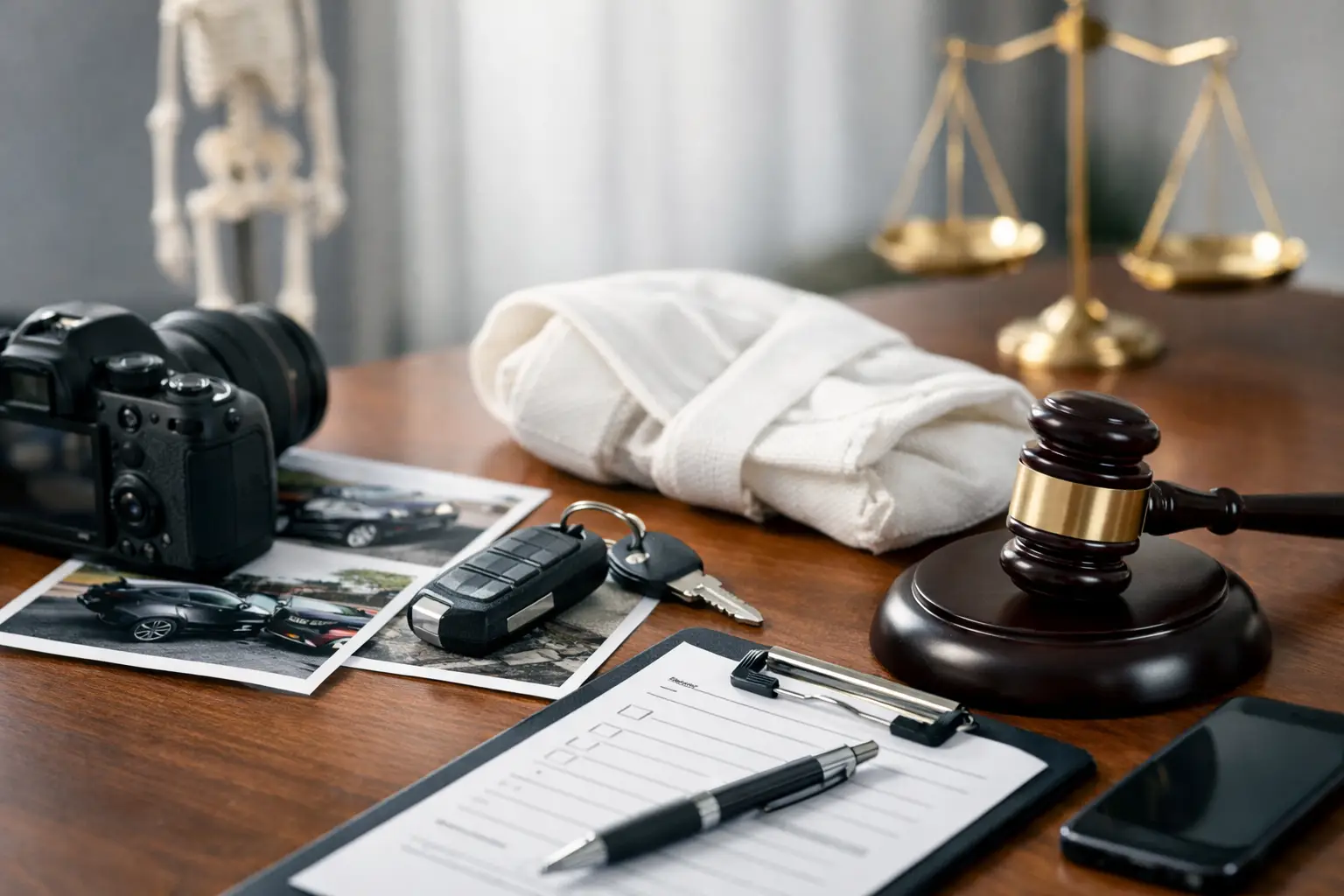
Photographs and video taken immediately after an accident can be difficult to challenge. Images may show vehicle positions, broken glass, skid marks, poor lighting, defective stairs, an unmarked wet floor, visible injuries, or unsafe conditions that disappear before an investigation begins.
For a car, truck, or motorcycle crash, photograph all vehicles from multiple angles, the roadway, traffic signals, license plates, weather conditions, debris, and any visible injuries. If you can safely do so, take a wide view of the entire scene before focusing on close-up damage. A wide-angle photo can establish context that a close-up image misses.
For a premises liability claim, photograph the dangerous condition itself and the surrounding area. In a slip and fall case, that may mean the liquid or debris, the lack of warning signs, the condition of the floor, and the lighting. In a nursing home injury matter, photographs of bruises, bedsores, restraints, or unsafe room conditions may be critical, provided they are taken respectfully and lawfully.
Do not edit photos or add filters. Keep the original files, since their dates and metadata can help establish when they were created.
Police Reports and Incident Reports Matter, but They Are Not the Whole Case
Call law enforcement after a serious traffic accident, especially where anyone is injured or fault is disputed. The police report may identify parties and witnesses, document roadway conditions, describe statements made at the scene, and note whether a driver received a citation.
If you are hurt at a business, apartment complex, or workplace, report the incident right away and request that an incident report be completed. Give an accurate, simple account of what occurred. Do not guess about facts you do not know, and do not minimize symptoms simply because adrenaline is masking pain.
These reports are useful starting points, but they can contain mistakes. A report alone does not decide fault or prove every injury. It should be supported by photos, medical documentation, witness accounts, and other evidence.
Medical Records Connect the Accident to Your Injuries
Prompt medical care protects your health and creates a documented connection between the accident and your condition. Waiting too long gives an insurer room to argue that you were not seriously hurt or that an unrelated event caused your symptoms.
Tell every treating provider how the injury occurred and describe all symptoms honestly. Neck pain after a crash can develop into headaches, numbness, or sleep problems. A fall may cause back pain, knee instability, or a concussion that is not obvious at first. The record should reflect the full picture, not only the most urgent complaint.
Useful medical evidence includes emergency room records, urgent care notes, primary care visits, diagnostic imaging, specialist evaluations, physical therapy records, prescriptions, treatment recommendations, and medical bills. Keep a personal record as well. A brief journal of pain levels, missed activities, sleep disruption, and treatment appointments can help show how the injury has affected daily life.
Follow reasonable treatment recommendations. Missing appointments or stopping care without explanation can be used against you. That said, you have the right to make medical decisions with your providers. The goal is not to receive unnecessary treatment. It is to obtain appropriate care and document your recovery accurately.
Independent Witnesses and Electronic Records Can Change a Case
A neutral witness can be especially persuasive because that person has no financial stake in the outcome. Get names and contact information for anyone who saw the accident, heard an admission of fault, noticed a dangerous condition, or observed your condition immediately afterward.
Electronic evidence can be equally valuable. Depending on the case, it may include nearby surveillance footage, dash camera video, cell phone records, vehicle event data recorders, truck electronic logs, dispatch records, maintenance files, or text messages. A commercial trucking case, for example, may require quick action to preserve records controlled by the trucking company.
Surveillance video is often overwritten within days or weeks. Do not assume a store, gas station, neighboring home, or local business will keep it. An attorney can send a preservation notice requesting that relevant evidence not be destroyed, but early contact matters.
Financial Records Prove the Cost of Being Hurt
A serious injury is not limited to the first medical bill. The financial impact may include time away from work, reduced hours, transportation to appointments, prescriptions, home assistance, and future treatment needs.
Save pay stubs, tax records, employer communications, work restrictions, disability paperwork, receipts, invoices, and benefit statements. If your injury affects your ability to return to your previous job, vocational and medical evidence may be needed to show future wage loss. For workers’ compensation and disability claims, complete employment and medical histories are often central to receiving the benefits you need.
Avoid relying on memory months later. Create one file for accident-related documents and add to it consistently. Small expenses can become meaningful when treatment lasts for months.
Mistakes That Can Undercut Strong Evidence
Do not give a recorded statement to the other side’s insurer before you understand your rights. Adjusters are trained to ask questions that may limit the claim, and early statements are often made before the full extent of an injury is known.
Be cautious on social media. A single photo or comment can be taken out of context to suggest you are less injured than you are. Do not delete relevant posts after a claim begins, because that can create separate problems. Instead, stop posting about the accident, your injuries, and your activities while the claim is pending.
Finally, do not hand over broad medical authorizations without legal advice. Insurers may seek years of unrelated medical records to search for arguments about preexisting conditions. A prior injury does not automatically defeat a claim, particularly when an accident worsens it, but the presentation of the medical evidence matters.
Protect Evidence Before It Is Gone
The strongest claim is built early, before the other side controls the narrative. Preserve what you have, seek appropriate medical attention, report the incident, and avoid assuming the insurer will conduct a fair investigation for you. Their job is to protect the company’s money, not to maximize your recovery.
If an accident has left you facing treatment, missed work, or a denied claim, Batzer Law can evaluate the evidence, identify what still needs to be preserved, and pursue the compensation or benefits your case supports. The right time to protect your case is while the proof still exists.