
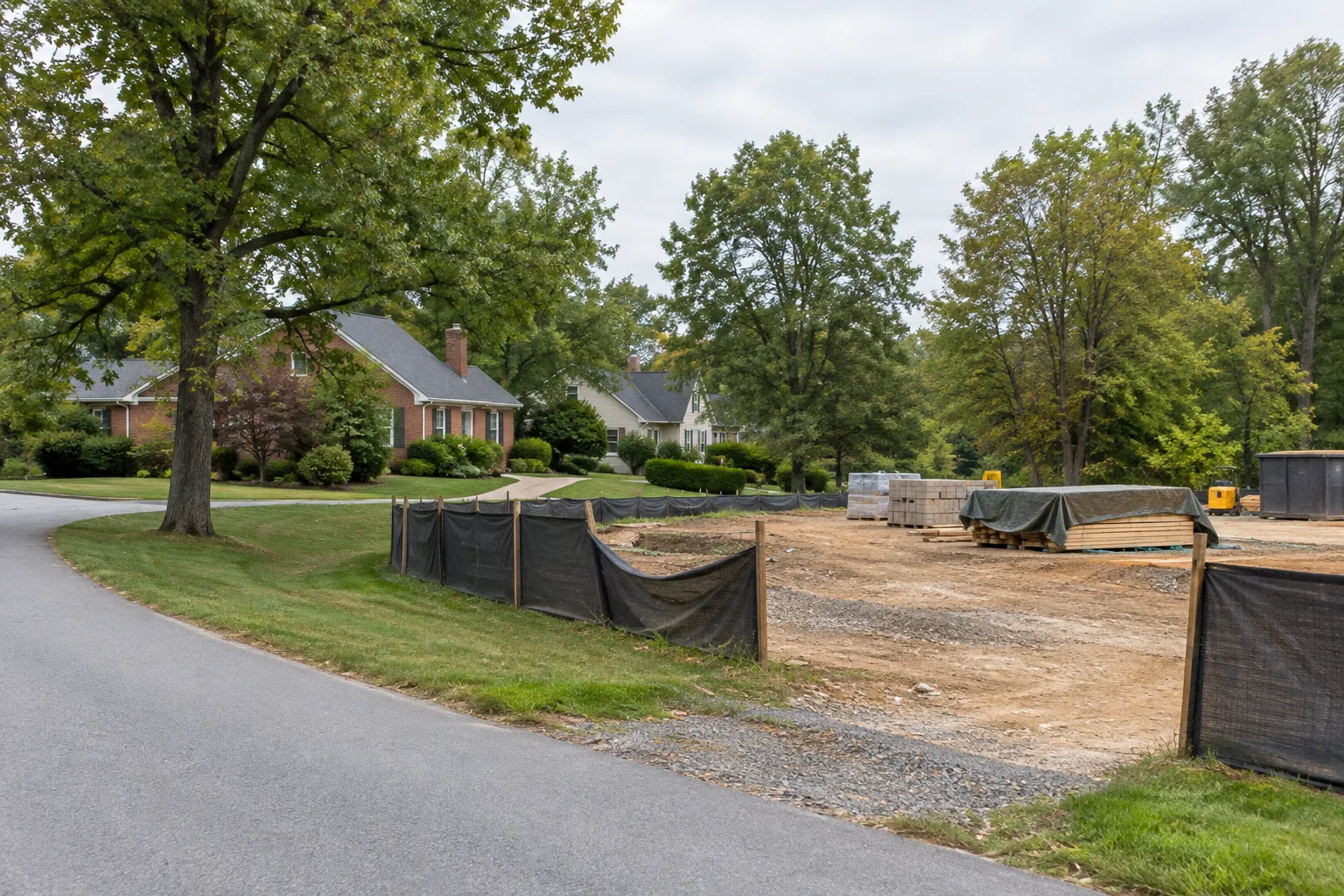
A child may be drawn to an open lot, a partly built structure, or equipment left within reach. If an injury follows, a family may wonder whether the property owner or someone managing the work should have done more to keep children away. A Bel Air child construction site injury lawyer can help explain the questions that may arise, but liability depends on the facts—not simply on whether a fence was missing.
The Law Offices of David Batzer helps families understand the issues that can matter in a premises-liability claim. This guide discusses how access, foreseeability, and the nature of a construction hazard may affect an evaluation, which parties may have controlled the site, and how to preserve useful information while attending to a child’s needs.
How an Unfenced Construction Area May Raise Liability Questions
A construction site can contain hazards that are difficult for a child to recognize, such as open excavations, unstable materials, exposed equipment, or unfinished structures. An injury does not automatically establish that an owner or contractor is legally responsible. A key starting point is identifying who controlled the property and the particular hazard, who created it or knew about it, and what steps were taken to restrict access or warn of danger. Those are central questions in Maryland premises liability and property-owner responsibility.
Ownership is not the only issue
A property owner may have transferred some day-to-day site responsibilities to a developer, general contractor, subcontractor, or property manager. Contracts and actual practices can matter, but a job title alone does not settle who had responsibility for a specific condition. Families may want to identify the owner, developer, general contractor, site manager, and any party responsible for barriers or warnings. This is one reason evidence that can identify the responsible property stakeholders may be useful; it does not establish that any one party is liable.
In Bel Air, MD, a careful review may consider how the site was used, whether work was active, and who could control entry at the time. Maryland law and the facts of an individual claim matter; the absence of a fence, by itself, does not decide the question.
Access, Foreseeability, and the Nature of the Hazard
When a child enters property without permission, the circumstances may matter. An evaluator may consider the child’s age and ability to appreciate danger, how the child reached the area, whether children were likely to enter, and whether the hazard was concealed or especially compelling to a child. A child’s presence does not automatically resolve a claim either way. The legal analysis can be fact-specific, and the type of hazard and the steps taken to prevent access may be important.
For example, an open route from a nearby sidewalk may present different facts from a site enclosed by secure barriers that were later moved. Prior reports of children entering, complaints about a gap, or repeated foot traffic could help show what a responsible party knew or should have anticipated. Families can also consider how fencing and access can matter in Bel Air child injury cases. Pool-related rules do not automatically apply to a construction site; the useful point is that access, warnings, and the particular danger warrant close attention.
Bel Air families should avoid assuming that a child’s entry makes a claim impossible—or that an unsecured area makes liability certain. Maryland premises-liability questions can turn on the specific evidence and applicable law. If a claim proceeds, the appropriate Maryland court depends on the issues and jurisdiction; local court information is available through the Maryland Judiciary for Harford County.
Documenting the Site, Witnesses, and the Child’s Care
A site can change quickly as construction continues, barriers are repaired, or equipment is moved. If it is safe and appropriate, families can preserve information without entering a dangerous or restricted area. Useful steps may include:
- Photographing the hazard and the route to it from a safe location, with images taken from more than one angle.
- Keeping original photo and video files, noting when they were made, and avoiding edits to the originals.
- Writing down the date, approximate time, weather, lighting, and what was observed as soon as practical.
- Asking witnesses for their names and contact details, and noting what each person saw or heard in their own words.
- Recording visible barriers, warning signs, lighting, gates, and any apparent points of entry.
These are practical ways to preserve information—not instructions to investigate the site yourself. Do not enter a hazardous area or delay care to gather proof. Families can review ways to preserve evidence after an injury and ask promptly about preserving relevant surveillance footage, access logs, inspection records, or reports. If there were earlier complaints or concerns about children entering, note who raised them and when, if known.
Medical care comes first. Keep discharge instructions, visit summaries, and follow-up records, and make brief notes about changes in symptoms or daily activities. Documenting a child’s injuries with medical records and notes can help create a clear timeline. A family should not postpone needed medical attention to collect evidence.
Frequently Asked Questions
Can a parent bring a claim if a child entered the site without permission?
Possibly, but the fact that a child entered without permission does not, by itself, answer whether a property owner or another party may be responsible. The circumstances of access, the child’s age, the nature of the hazard, and what the relevant parties knew or could have anticipated may matter under Maryland law. A lawyer can assess how those facts apply to a particular situation.
Does the absence of a fence automatically make an owner liable?
No. A missing fence may be relevant, but it does not automatically establish fault. The review may consider who controlled the site, whether other barriers or warnings were used, the danger involved, and whether entry by children was foreseeable. It may also be necessary to examine the roles of contractors or other parties. The outcome depends on the evidence and applicable Maryland law.
What if there were no witnesses to the incident?
A claim is not necessarily impossible without an eyewitness. Photographs, physical conditions, site records, surveillance footage, and observations made soon after the event may help clarify what happened. Families can note who arrived afterward or who may have seen the child enter or leave the area. Whether particular evidence is available or useful depends on the circumstances, and site conditions may change over time.
Can a parent settle a child’s injury claim without additional review?
A child’s claim may involve considerations that differ from an adult’s claim, and a parent may not be able to resolve every aspect of it in the same way as an adult claimant. Requirements can depend on the circumstances and applicable Maryland procedures. For general background, see Maryland considerations when resolving a child’s injury claim; that resource concerns a car claim, so its liability rules do not determine a construction-site case.
How The Law Offices of David Batzer Can Help
The Law Offices of David Batzer is dedicated to helping families understand the questions that may follow a child’s injury on unsafe property. A careful review can look at access, the hazard itself, who controlled the construction area, prior concerns, and what records may help explain the event. The firm can also discuss how Maryland law may apply to the circumstances, without assuming that any particular party is responsible. If a child was hurt at a construction site in Bel Air or elsewhere in Harford County, contact the firm to request a consultation or case evaluation and discuss your family’s concerns.
This overview discusses general Maryland considerations; laws vary by location and may have changed since publication. The information in this article is for educational purposes only and does not constitute legal advice. Contact a qualified attorney authorized to practice in the jurisdiction that applies to your matter for advice specific to your situation.