
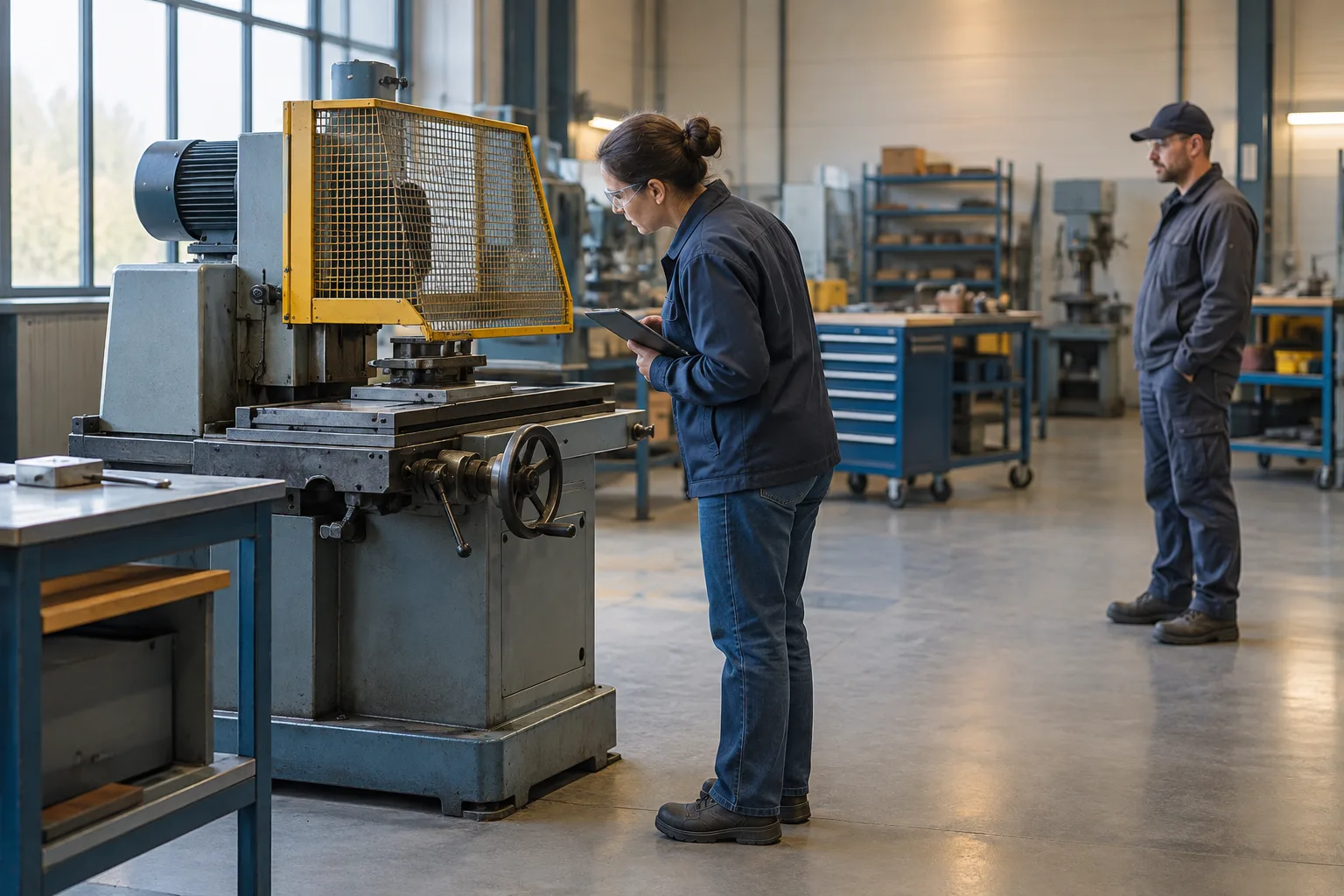
A machine jams, a safety guard gives way, or a tool behaves differently than expected—and a worker is hurt while doing an ordinary job. If you are researching whether a work injury involving defective equipment could support a third-party claim in Maryland, the key question is whether someone other than your employer may have contributed to the harm. The answer depends on the equipment, how it was used and maintained, and the available evidence.
Workers’ compensation and a civil claim against another party are different processes. One does not automatically establish the other, and an equipment failure alone does not prove that a product or service was legally defective. The Law Offices of David Batzer helps injured workers understand these questions and the information that may matter. This article explains who might be involved, how a third-party claim differs from workers’ compensation, and what basic equipment, incident, and medical details may be useful to preserve.
How a defective-equipment work injury could lead to a third-party claim
Maryland workers’ compensation may provide benefits for a qualifying work-related injury without requiring the worker to prove that the employer was negligent. A separate civil claim may be possible when facts point to a potentially responsible party other than the employer. For an overview of the benefits process, see Maryland workers’ compensation benefits for injured employees.
A product-related claim may raise questions about a design, a manufacturing flaw, or instructions and warnings. A claim might also concern work performed by an outside company, such as equipment installation, inspection, repair, or maintenance. These are possibilities to investigate—not conclusions about fault. A product can fail for reasons unrelated to a legal defect, and responsibility may depend on how it was selected, used, modified, and maintained.
Who might be considered a third party?
Depending on the circumstances, potential parties could include a manufacturer, distributor, seller, contractor, or maintenance provider. The employer’s role in choosing, adjusting, or servicing equipment may also be relevant, but a claim against an employer is not the same as a claim against an outside party. Whether a particular claim is available requires a fact-specific legal review.
In Bel Air and elsewhere in Harford County, an injured worker may be dealing with the workers’ compensation process while trying to identify who made or serviced a piece of equipment. Keep the two questions distinct: what benefits may be available through workers’ compensation, and whether evidence supports a separate claim against someone else.
What information can help clarify a Maryland third-party claim?
Early, accurate records can help explain what happened and identify people or companies connected to the equipment. Report the incident through the workplace process and describe the event as clearly as possible. Include the equipment involved, what it was doing, where and when the incident occurred, and who saw it. For more on this issue, read why reporting a Maryland work injury may matter to a third-party claim.
If it can be done safely and without interfering with an investigation or workplace rules, note identifying details such as the equipment’s make, model, serial number, location, and visible condition. Do not alter, repair, discard, or move equipment just to gather evidence. Follow applicable workplace procedures, and leave inspection and handling decisions to the appropriate people. Photographs may help record the scene or equipment, if permitted and safe. You can also note witness names and how to contact them. This overview of evidence that can help support a Maryland injury case offers additional preservation guidance.
Keep medical and work-impact information
Describe the incident accurately when seeking medical care and provide the information requested by the treating professionals. Keep copies of available visit summaries, work-status documents, and other relevant records. A simple dated note about symptoms, appointments, and changes in daily activities can help you recall details later; it is not a substitute for medical records or professional care. See these ways to document injuries with photographs and medical records for more information.
For workers in Bel Air, the Maryland Workers’ Compensation Commission is the state agency associated with the workers’ compensation system. A potential civil claim may involve different parties and procedures. The right steps depend on the facts, and local circumstances in Harford County do not by themselves determine whether a product or service was defective.
Preserve the facts and consider separate claim deadlines
Equipment can be repaired, replaced, or returned to service after an incident. That makes a clear record of its condition and identity potentially useful. If equipment is being inspected, keep track of who is handling it and any communications about inspection or repair. Avoid making assumptions about the cause before the facts are reviewed; a failure may involve a product issue, maintenance, use, or more than one factor.
A practical record may include:
- The date, time, and location of the incident, along with a factual description of what occurred.
- Equipment identification and condition details, plus any permitted photographs of the scene.
- Names and contact information for witnesses, if available.
- Incident reports and communications about the equipment, repair, inspection, or maintenance.
- Medical records and a personal timeline of care and work-related effects.
Workers’ compensation procedures and a civil claim have separate legal questions. Reporting an incident or pursuing benefits does not necessarily preserve every possible civil claim. A claim may have a filing deadline, and the applicable period can depend on the facts and the parties involved. Review Maryland’s personal-injury filing window for general information, but do not assume a general summary resolves the deadline for a specific matter. Laws and procedures can change, so a Maryland attorney can assess how the rules may apply.
An attorney evaluating a possible claim may ask to review equipment details, incident documentation, medical information, and communications identifying manufacturers or service providers. In Bel Air, gathering and organizing those facts can help make an initial discussion more focused, without guaranteeing that a claim exists or that a particular party is responsible.
Frequently Asked Questions
Does equipment have to break during normal use for a claim to be considered?
Not necessarily. The relevant facts may include how the equipment was designed, made, maintained, modified, and used, as well as the instructions and warnings provided. A malfunction by itself does not establish a legal defect or prove who is responsible. An attorney may need to review the equipment, records, and circumstances to assess whether a claim against a non-employer could be available.
Could a maintenance or repair company be involved in a third-party claim?
Possibly, if the company’s work is relevant to the equipment failure and the evidence supports a legal basis for a claim. The details matter, including what work the company agreed to perform, when it performed it, and whether that work may have contributed to the incident. The involvement of a contractor alone does not establish fault or liability.
What if the equipment was modified or repaired before the incident?
Modification or repair history may be important because it can help explain the equipment’s condition and how it was used. Records might include service notes, inspection history, purchase or maintenance information, and communications about prior problems. If those records are available, they may help an attorney assess what happened. Their significance depends on the specific facts and any applicable legal requirements.
Does a workers’ compensation claim pause the deadline for a third-party case?
Do not assume that it does. Workers’ compensation and a civil claim against another party may follow different procedures and deadlines. The applicable time limit can depend on the circumstances, including the potential parties and type of claim. A delay in asking about a possible civil case could affect available options, so an attorney can explain which deadlines may apply to the facts.
How The Law Offices of David Batzer Can Help
The Law Offices of David Batzer is dedicated to helping injured workers understand how workers’ compensation questions may differ from a potential claim involving defective equipment or another outside party. The firm can review the available incident and equipment information, discuss what records may be relevant, and evaluate whether the facts raise questions about a manufacturer, seller, or service provider. No outcome can be promised, and each matter depends on its evidence and applicable law. If you were injured at work in Bel Air or elsewhere in Maryland, contact the firm to request a free consultation or case evaluation.
The information in this article is for educational purposes only and does not constitute legal advice. Contact a qualified attorney authorized to practice in the jurisdiction that applies to your matter for advice specific to your situation.