
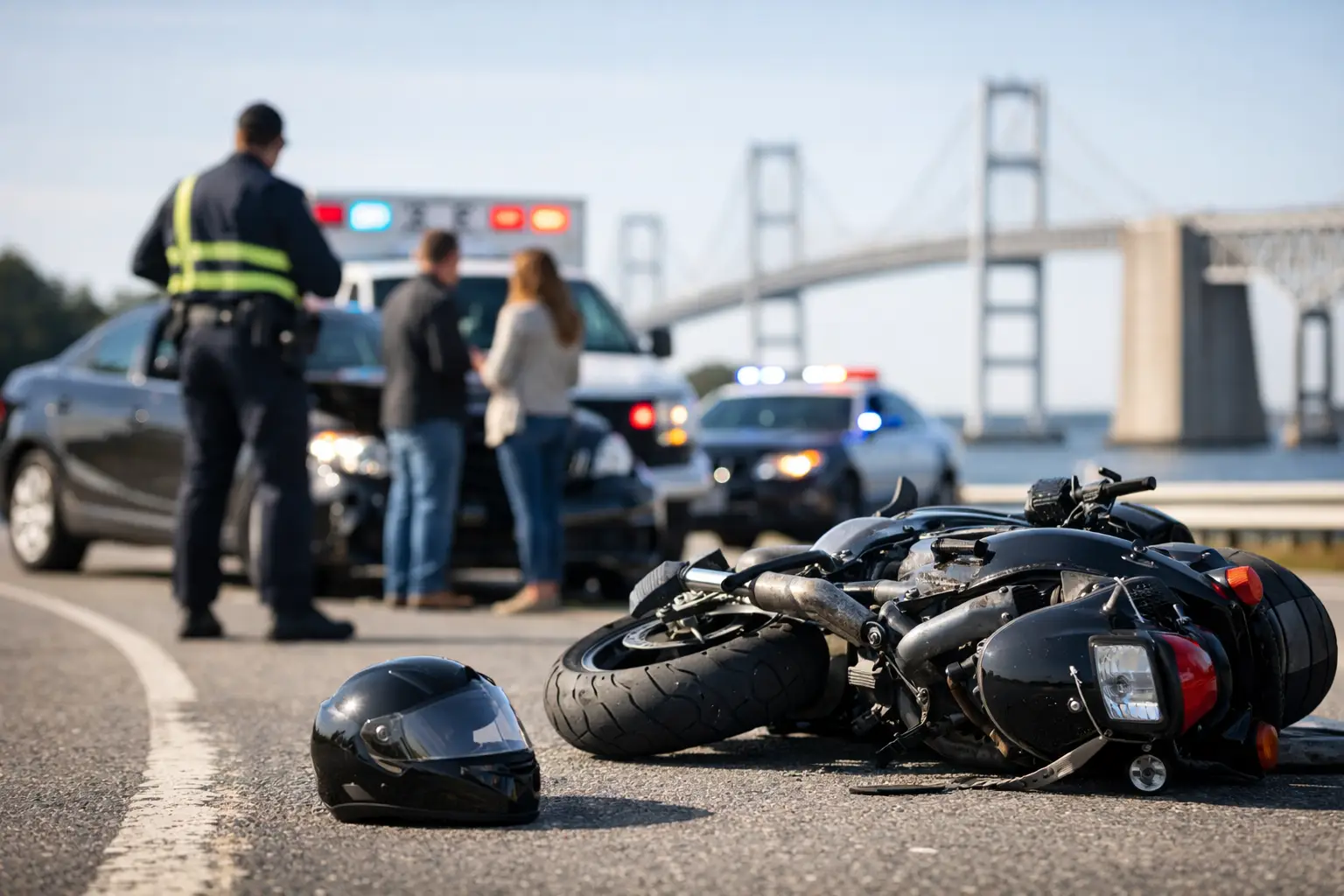
A motorcycle crash can turn into a legal fight before the road rash is even cleaned up. The driver says they never saw you. The insurance company wants a recorded statement. Bills start arriving while your bike sits wrecked. That is where maryland motorcycle accident laws matter – because the rules on fault, insurance, helmets, and deadlines can make or break your injury claim.
How Maryland motorcycle accident laws affect your case
Maryland gives injured riders the right to pursue compensation when another person’s negligence caused the crash. That sounds straightforward, but motorcycle cases are rarely treated fairly at first. Riders often face bias from insurance adjusters who assume speeding, weaving, or risky riding even when the evidence says otherwise.
The law looks at whether another party failed to use reasonable care. That might mean a driver turned left in front of a motorcycle, changed lanes without checking a blind spot, followed too closely, opened a car door into traffic, or drove distracted. In some cases, a road defect, poor maintenance, or a defective part may also play a role. The key issue is not whether the rider was injured badly. It is whether someone else is legally responsible for causing those injuries.
If liability is clear, a rider may seek compensation for medical expenses, lost wages, pain, suffering, and other losses tied to the wreck. If the injuries are serious, the claim may also include future treatment, reduced earning capacity, and long-term disability damages.
Fault is the biggest legal issue in Maryland
The hardest part of many motorcycle cases is not proving the injury. It is proving fault cleanly enough to survive Maryland’s harsh contributory negligence rule.
Maryland follows contributory negligence
Maryland is one of the few states that still uses contributory negligence. Under this rule, if the injured rider is found even slightly at fault for the crash, recovery can be barred entirely. That is a brutal rule, and insurance companies know how to use it.
For example, an adjuster may argue the rider was traveling a little too fast, failed to keep a proper lookout, or could have avoided impact. Even weak arguments can become dangerous if they create room to blame the motorcyclist for a small share of fault. In many other states, that would simply reduce compensation. In Maryland, it can destroy the claim.
That is why evidence matters early. Skid marks, vehicle damage, helmet damage, surveillance video, witness statements, and the positions of the vehicles after impact can all help show what really happened. Delay helps the insurer. Fast investigation helps the injured rider.
Drivers still owe riders the same duty of care
Motorcyclists have the same right to use the road as anyone else. A driver cannot excuse a crash by saying the bike was hard to see. If a motorcycle was there to be seen, the driver still had a duty to observe traffic, yield when required, and operate safely.
That matters in common crash scenarios, especially left-turn collisions and unsafe lane changes. Drivers often claim they looked but did not see the rider. Legally, that can be evidence of negligence, not a defense.
Insurance issues after a motorcycle accident
Insurance questions come up quickly after a crash, and many riders are surprised by how different the process can feel compared with an ordinary car accident.
Maryland requires vehicle owners to carry liability insurance, and injury claims are often made against the at-fault driver’s policy. If that driver is uninsured or underinsured, your own uninsured motorist or underinsured motorist coverage may become critical. Those claims can still become a fight. Your own insurer may act less like a good neighbor and more like an opponent once real money is at stake.
Motorcycle cases also tend to involve higher injury values because the rider has less physical protection. That means insurers often work harder to dispute treatment, challenge the seriousness of injuries, or argue that some of the medical care was unrelated. They may push for a quick settlement before the full scope of the injury is known. That can be a costly mistake, especially where surgery, chronic pain, nerve injury, or time away from work continues to develop.
Helmet laws and how they can affect claims
Maryland requires helmets and eye protection
Maryland law requires motorcycle riders and passengers to wear helmets that meet legal standards. Eye protection is also generally required unless the motorcycle has approved safety glass.
Violating helmet laws can create problems in a claim, but the impact depends on the facts. If the crash involved a broken leg or shoulder injury, helmet use may have little to do with the damages at issue. If the case involves a traumatic brain injury, the insurance company will almost certainly focus on whether the rider wore a compliant helmet and whether that affected the severity of the injuries.
That does not mean every helmet-related argument wins. The defense still has to connect the alleged violation to the injuries being claimed. But riders should expect the issue to come up. It is one more reason serious motorcycle cases need a careful legal strategy rather than a casual back-and-forth with an adjuster.
What damages may be available
Maryland motorcycle accident laws allow injured riders to pursue both financial and human losses. Medical bills are only part of the case.
A strong claim may include emergency treatment, hospitalization, surgery, rehabilitation, prescriptions, and future care. It may also include lost income, diminished earning ability, and out-of-pocket costs created by the crash. Pain and suffering can be significant in motorcycle cases because these injuries often involve fractures, scarring, road rash, spinal injuries, and lengthy recovery periods.
Not every case is worth the same amount. The value depends on liability, the severity of the injuries, the quality of the medical proof, available insurance coverage, and whether the defense has a realistic contributory negligence argument. A minor injury case with disputed fault will look very different from a clear-liability crash involving permanent disability.
Deadlines can quietly ruin a good case
Maryland motorcycle accident laws include strict filing limits
In Maryland, most personal injury claims must be filed within three years of the accident. That sounds like plenty of time, but waiting is risky.
Evidence disappears. Witnesses become harder to find. Video footage gets erased. Vehicles are repaired or salvaged. By the time an insurer stops delaying and lowballing, the clock may be much shorter than it looks.
Special notice rules and shorter deadlines can apply in certain cases, especially where a government vehicle, public roadway issue, or government entity may be involved. Those claims need prompt review because missing a notice requirement can end the case before it starts.
What to do after a motorcycle crash
The legal side of a motorcycle accident starts immediately, whether you are ready or not. Get medical care first. Then preserve as much evidence as possible. Photos of the scene, your injuries, your helmet, your riding gear, and the damage to every vehicle can become important later.
If there were witnesses, get names and contact information. Do not assume the police report will capture everything. Be careful with recorded statements to insurance companies, especially if fault is disputed or your injuries are still being evaluated. What sounds like a harmless comment can be used later to suggest you were partly to blame.
It is also wise to avoid guessing about your condition too early. Many motorcycle injuries worsen over time. A rider who says they are probably fine at the scene may end up needing surgery days later.
When legal help becomes necessary
Some motorcycle claims are disputed from day one. Others start politely and then stall once the insurer realizes the injuries are serious. If fault is being questioned, if your injuries are significant, or if the insurance company is pushing quick money, legal representation is usually not optional in any practical sense.
An experienced injury lawyer can investigate the crash, preserve evidence, handle insurer communications, measure damages properly, and push back against the predictable effort to blame the rider. That matters in any personal injury case, but it matters even more in Maryland because contributory negligence gives the defense so much leverage.
Batzer Law represents injured people in Maryland with a direct, litigation-focused approach because serious injury claims should not be handled like a paperwork exercise.
A motorcycle wreck leaves enough to deal with physically, financially, and emotionally. The law should protect your right to recover, but only if the facts are developed early and presented the right way. If you were hit, do not let an insurance company turn a driver’s mistake into your burden to carry alone.