
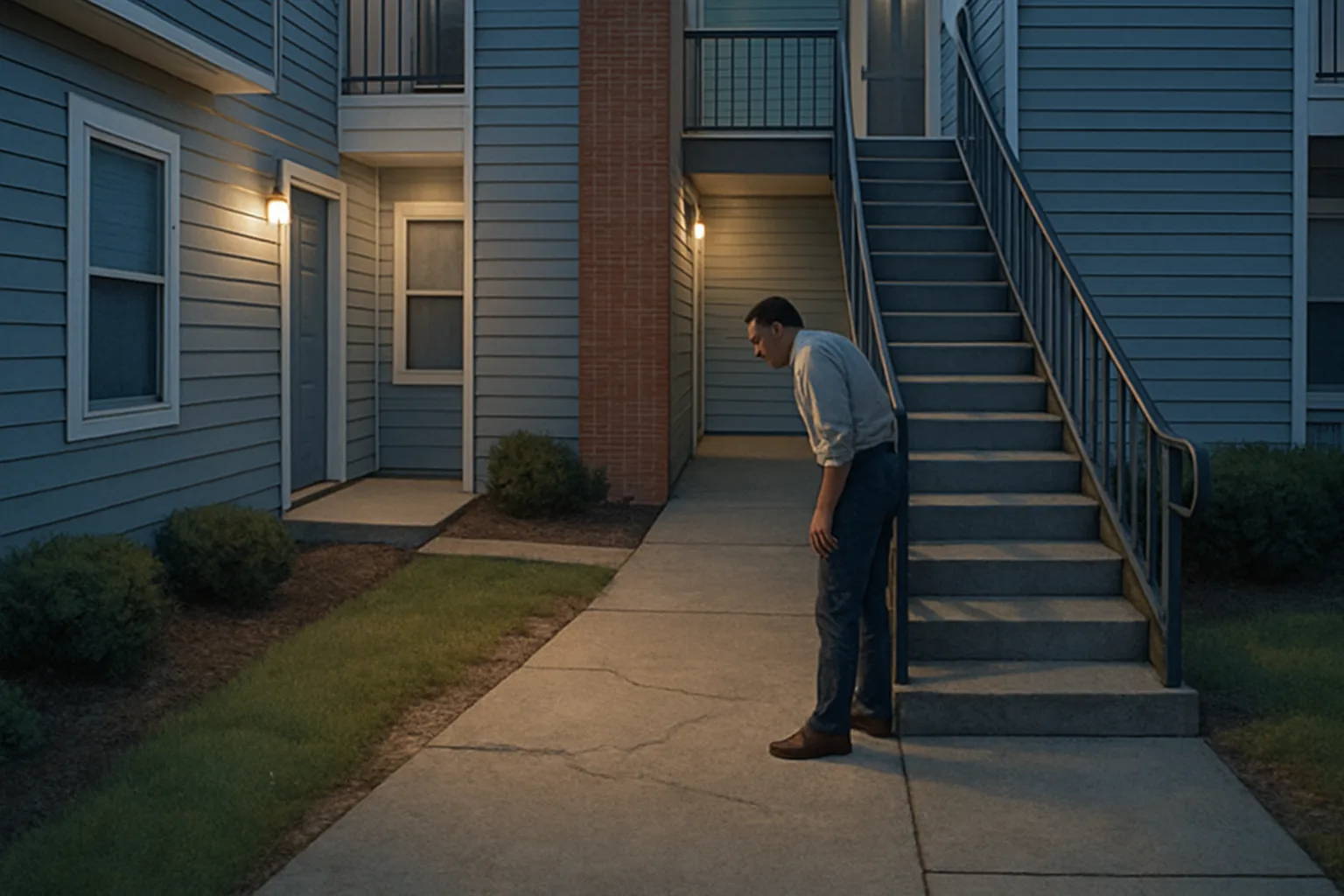
A fall on rental-property stairs, an icy walkway, or a poorly lit entrance can leave a tenant or visitor facing medical care, missed work, and difficult questions about responsibility. If you are searching for a Bel Air rental property injury lawyer, you may be asking whether the landlord, property manager, tenant, or another party can be held legally responsible.
The answer depends on details—not simply on who owns the building. In Maryland, a premises-liability analysis may examine what caused the fall, who controlled the area, whether someone knew or should have known about the hazard, and whether reasonable steps were taken to address it. The Law Offices of David Batzer can help injured people understand which facts may matter before deciding how to proceed.
This guide discusses evidence such as maintenance requests, photographs, inspection records, repair histories, lighting conditions, and the reason the injured person was on the property. It also explains how landlord and tenant responsibilities can overlap in Bel Air, MD.
When Could a Landlord Be Responsible for a Bel Air Rental Property Fall?
A landlord is not automatically liable for every injury occurring at a rental property. Generally speaking, responsibility may depend on ownership, control, notice, and whether the condition was unreasonably dangerous under the circumstances. A property manager, maintenance company, or tenant may also have a role, depending on the facts.
Conditions that may require closer review
Potentially important hazards can include:
- Broken or unstable stairs
- Missing, loose, or defective handrails
- Inadequate lighting near entrances, walkways, or parking areas
- Uneven flooring, torn carpeting, or damaged sidewalks
- Ice, snow, water, or other slippery conditions
- Building defects that the landlord agreed to repair or maintain
A landlord may have a stronger connection to a common-area condition, such as a shared stairwell or walkway, when the landlord or an agent retained control over inspection and maintenance. By contrast, a lease may assign certain maintenance duties to a tenant. The written lease, actual practice, and communications between the parties can all matter.
Notice is another central issue. Evidence that the landlord received a written maintenance request, saw the condition, received a prior complaint, or had enough time to discover it may support an argument that the hazard was foreseeable. Lack of notice does not resolve every case, but it can make proof more difficult.
In Bel Air, MD, an attorney evaluating a rental-property fall may examine the property’s layout, lease terms, maintenance history, and the relationship between the owner, manager, and tenant.
What Evidence Can Support a Bel Air Premises Liability Claim?
A serious fall can create uncertainty about what happened. Conditions may change quickly: ice melts, a railing is repaired, a light is replaced, or damaged flooring is removed. Preserving information early may help clarify the condition and who knew about it.
Useful evidence may include:
- Photographs and video. Images can show the hazard, lighting, weather, surrounding area, stair design, and whether a warning was visible. Photographs from several angles may provide more context than a close-up alone.
- Maintenance requests and messages. Emails, tenant-portal submissions, text messages, and written notices may help establish when a problem was reported and how the owner or manager responded.
- Inspection and repair records. Work orders, vendor invoices, inspection reports, and property-management logs may show whether the condition was discovered, repaired, ignored, or recurring.
- Witness information. Names and contact details for people who saw the condition, the fall, or earlier complaints can be important. A witness may also clarify whether lighting, snow, clutter, or another feature affected visibility.
- Medical and employment records. These may document the nature of the reported injuries, treatment, restrictions, and time away from work. They should be handled with attention to privacy and accuracy.
The reason the person was on the property also matters. A tenant, invited guest, delivery worker, social visitor, or unauthorized entrant may be evaluated under different premises-liability principles. The property owner’s duty can depend in part on the person’s status and what the owner could reasonably anticipate.
For a rental property slip and fall in Maryland, an attorney may also consider whether a governmental entity, contractor, snow-removal company, or other party controlled the condition. Different parties may have different records and legal responsibilities.
What Responsibilities and Mistakes Matter After a Rental Fall?
Landlords and property managers generally benefit from consistent inspections, prompt responses to complaints, appropriate repairs, and reasonable warnings while a hazard remains. Tenants may have duties under the lease or ordinary circumstances, such as reporting dangerous conditions, avoiding conduct that creates hazards, and following reasonable safety instructions. These responsibilities do not automatically determine liability, but they can affect how the facts are evaluated.
Maryland’s negligence rules also make the injured person’s conduct relevant. Maryland generally follows a contributory-negligence approach, which can create significant issues if the evidence suggests the injured person failed to use reasonable care. Because legal standards may vary by jurisdiction and may change, a current review of Maryland law is important.
Common mistakes after a rental-property fall include:
- Assuming the owner is responsible without identifying who controlled the area
- Waiting to photograph the condition or report what happened
- Deleting messages or failing to preserve maintenance communications
- Giving a recorded statement without understanding the questions
- Posting photographs or comments about the incident on social media
- Treating a lease provision as conclusive without reviewing how the property was actually maintained
A person may want to keep a factual timeline, preserve relevant communications, and document the location without altering it. Depending on the circumstances, an attorney may advise sending preservation requests or investigating ownership, management, maintenance, and insurance information. These steps are case-specific and do not replace legal advice.
A Bel Air premises liability claim may involve negotiation, investigation, or litigation in Maryland courts. The appropriate path depends on the evidence, the parties involved, the injuries, and applicable deadlines.
Frequently Asked Questions
Does a landlord have to pay for every tenant injury in Maryland?
No. Maryland landlord liability for tenant injury is not automatic. The analysis may consider whether the landlord or property manager controlled the area, knew or should have known about the dangerous condition, had a reasonable opportunity to address it, and whether the condition caused the injury. Lease terms, tenant conduct, notice, and the injured person’s status on the property may also matter.
What if my visitor fell at my Bel Air rental home?
A visitor’s claim may depend on why the person was present, whether the visit was expected or permitted, and who knew or should have known about the hazard. The tenant, landlord, property manager, or another party could potentially have relevant responsibilities. Preserve photographs, messages, and witness information, and seek advice about the facts before making conclusions about liability.
Can I bring a claim if the landlord repaired the hazard after my fall?
A later repair does not by itself establish liability or eliminate a potential claim. However, the repair may change the condition that needs to be documented. Photographs, prior complaints, work orders, inspection records, and witness accounts may help show what existed at the time. The legal significance of subsequent repairs can depend on the circumstances and applicable Maryland law.
What information should I bring to a premises-liability consultation?
Helpful materials may include the lease, photographs or video, maintenance requests, emails and texts, incident reports, witness details, medical records or bills, and information about missed work. A written timeline can also help organize events. Do not assume that missing one item prevents an evaluation; an attorney may identify other sources of evidence.
How The Law Offices of David Batzer Can Help
The Law Offices of David Batzer is dedicated to helping injured tenants, visitors, and other individuals evaluate potential premises-liability claims. The firm can review the fall location, the reason the person was on the property, notice and maintenance evidence, lease provisions, medical documentation, and the roles of the landlord, property manager, tenant, or contractors.
The firm is committed to fighting for clients’ rights while providing a clear assessment of available options. If you were seriously hurt at a rental property in Bel Air, MD, contact The Law Offices of David Batzer for a free consultation or case evaluation.
The information in this article is for educational purposes only and does not constitute legal advice. Contact a qualified attorney licensed in Bel Air, MD for advice specific to your situation.