
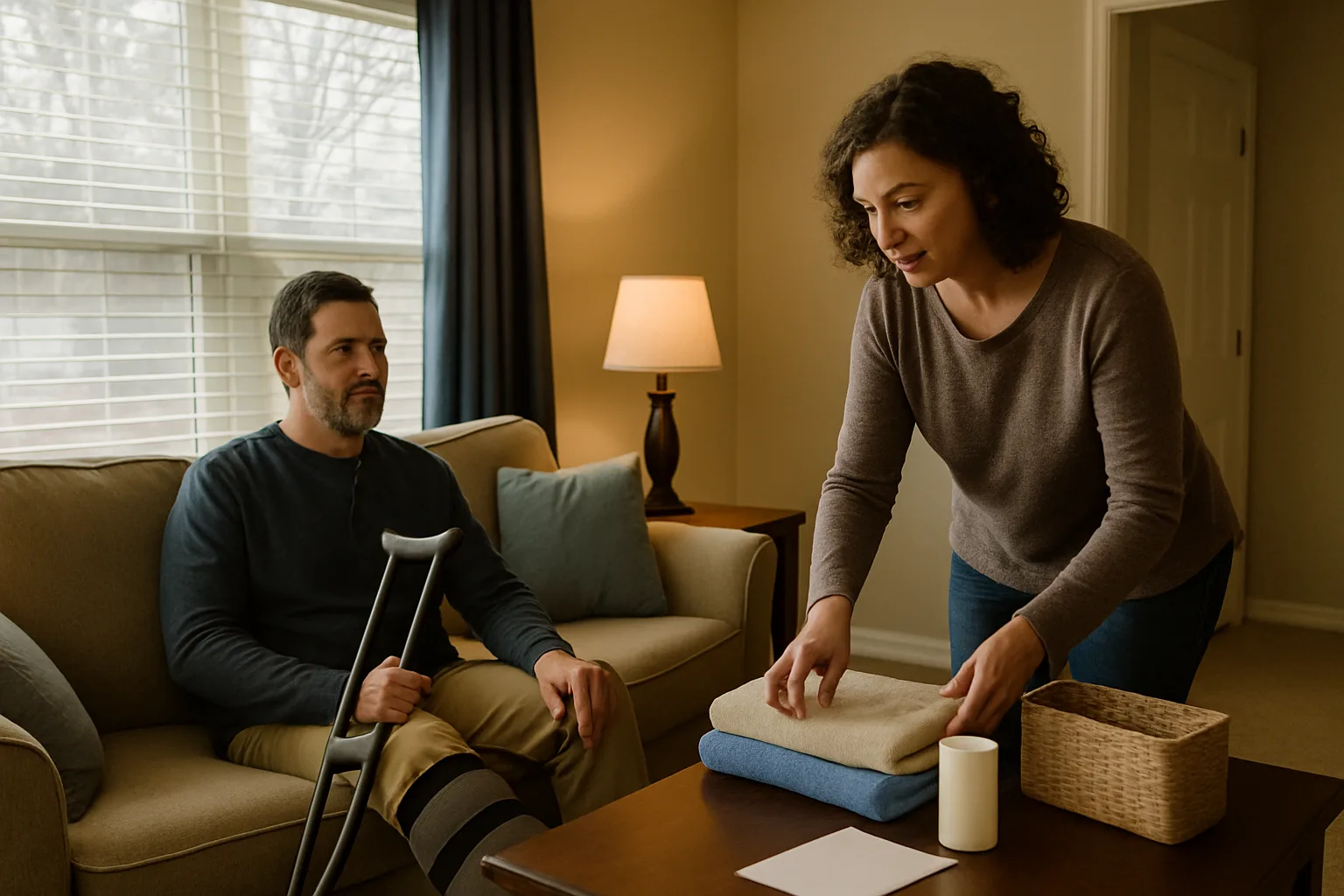
An injury can change how a couple shares responsibilities, spends time together, and maintains emotional and physical closeness. The effects may continue even when the injured person’s medical bills and lost income are the most visible losses. A Maryland loss of consortium claim may address certain relationship harms experienced by a spouse, but it is not simply another version of the injured person’s personal injury claim.
For practical background on documenting accident injuries with medical records and daily notes, spouses can consider how contemporaneous records show changes over time. The Law Offices of David Batzer helps Maryland injury victims and families understand how different damages may fit together. This article explains what loss of consortium generally means, what evidence may support it, why it is connected to the underlying injury case, and what Bel Air couples may want to discuss with a qualified attorney.
What Is a Maryland Loss of Consortium Claim?
Loss of consortium is a relationship-based claim that may be available to a spouse when another person’s legally actionable injury substantially affects the marital relationship. Depending on the circumstances, the relationship impact may involve companionship, affection, intimacy, household partnership, or the ability to participate in shared activities. The claim focuses on the spouse’s loss—not solely on the injured person’s pain or treatment.
How the spouse’s claim differs from the injured person’s damages
The injured person may seek damages connected to medical care, physical pain, emotional effects, lost wages, or reduced earning capacity. A spouse’s claim, by contrast, generally concerns the effects of the injury on the marriage. These categories can overlap factually, but they are not automatically interchangeable.
For example, a car crash in or around Bel Air, MD may leave one spouse unable to drive, work, exercise, or perform ordinary household tasks. Those limitations may create medical and financial losses for the injured person while also changing the couple’s companionship, routines, and shared responsibilities. Whether those changes support a separate claim depends on the facts and applicable Maryland law.
A relationship claim is not a claim for every household hardship
A family may face transportation problems, added childcare, replacement services, or reduced income after an injury. Those effects are important, but they do not all qualify as loss of consortium damages. Lost wages and reduced earning capacity after a Maryland injury involve different proof and legal categories, even when they affect the entire household.
What Evidence Can Support a Spouse’s Loss-of-Consortium Claim?
A spouse’s testimony may be important, but a strong factual record usually includes more than a general statement that the marriage became difficult. Evidence should help show what the relationship was like before the injury, what changed afterward, and how those changes connect to the injury’s symptoms, restrictions, and expected duration.
- Medical records describing pain, limitations, treatment, restrictions, and functional changes.
- Therapy or rehabilitation records showing how mobility, endurance, communication, or independence changed.
- A private calendar or journal recording missed activities, altered routines, caregiving demands, and significant relationship changes.
- Photographs or other ordinary records showing changes in hobbies, travel, household participation, or family activities.
- Testimony from the spouses and, when appropriate, people who observed meaningful changes in daily life.
These materials should be accurate and created in the ordinary course of documenting events—not prepared to exaggerate a claim. Guidance on reviewing medical records in a Maryland injury claim can help explain why treatment records matter. Medical evidence may support the connection between the underlying injury and functional limitations, while the spouse’s testimony may describe how those limitations affected the marital relationship.
When relationship effects may continue into the future
Some injuries involve continuing treatment, permanent restrictions, or uncertain recovery. Evidence about future medical costs in a Bel Air injury claim may also help place long-term relationship effects in context. The existence of future medical needs does not automatically establish future consortium damages, but projected care, rehabilitation, or life changes may be relevant when evaluating whether the relationship impact is temporary or ongoing.
Why Is the Spouse’s Claim Connected to the Underlying Injury Case?
A Maryland loss of consortium claim is generally derivative, meaning it is tied to the injured person’s underlying claim rather than being an entirely separate accident claim. The spouse must generally connect the relationship harm to an injury for which another party may be legally responsible. This makes liability, causation, injury severity, and defenses in the primary case important to the related claim.
For example, if an insurer disputes who caused a Maryland car accident, that dispute may affect both the injured person’s claim and a spouse’s related claim. Maryland’s contributory negligence rule can also make fault analysis especially important. Under that rule, a person found contributorily negligent may face significant limits on recovery in a negligence case; how the rule applies depends on the facts and current Maryland law. A plain-language explanation of Maryland’s contributory negligence rule provides additional context.
Coordination matters during negotiation or litigation
The spouse’s claim may be evaluated alongside the injured person’s claim, but the claims should not be casually treated as identical. The parties may need to identify who is asserting which damages, what evidence supports each category, and whether an agreement resolves both claims.
Before reviewing an insurance settlement offer before signing, a couple may need to understand whose claims are included, whether the spouse’s claim is addressed, and whether a release could affect unresolved relationship-related damages. Settlement language can be consequential, and the appropriate review depends on the specific documents and circumstances.
Common Questions About a Spouse Claim After a Maryland Injury
Does a spouse have to prove a physical injury of their own?
Usually, the spouse’s loss-of-consortium claim focuses on harm to the marital relationship caused by the injured person’s legally actionable injury. The spouse does not necessarily need a separate physical injury. However, the claim still requires specific proof of relationship changes and a connection to the underlying incident. The exact requirements can depend on the facts, the type of injury, and Maryland law applicable when the claim is evaluated.
Can a spouse’s testimony be enough to show relationship harm?
A spouse’s firsthand testimony can be important because spouses directly observe changes in companionship, shared activities, household participation, and intimacy. Still, testimony is often considered with other evidence, such as medical records, treatment restrictions, calendars, photographs, and testimony from people familiar with the couple’s life. Consistency and a clear before-and-after explanation may help establish the nature and duration of the claimed relationship impact.
Does a premises liability injury qualify for a consortium claim?
It may, if the injured person can establish a legally viable premises liability claim and the injury substantially affects the marital relationship. The cause of the injury—such as a fall or another incident on property—is only part of the analysis. The couple may also need to show how the injury changed companionship, affection, shared activities, or other aspects of the marriage. The result depends on liability, evidence, and Maryland law.
Can a spouse bring a claim if the couple lives in Harford County?
Living in Harford County, including Bel Air, does not by itself establish a consortium claim. Location may affect where a case is handled, but eligibility and proof depend on the injury, the marital relationship, the responsible party, and applicable Maryland law. A qualified attorney can review whether the facts support a related claim and how it may need to be coordinated with the injured person’s case.
How The Law Offices of David Batzer Can Help
The Law Offices of David Batzer is dedicated to helping injury victims and families in Bel Air, MD understand the legal and practical effects of an accident. The firm can evaluate how medical limitations, relationship changes, household responsibilities, and financial losses may fit within separate or related damage categories.
The team is committed to fighting for clients’ rights while carefully examining medical records, liability evidence, witness accounts, and settlement documents. If an injury has affected your marriage or family life, contact The Law Offices of David Batzer for a free consultation or case evaluation to discuss your situation and legal options.
The information in this article is for educational purposes only and does not constitute legal advice. Contact a qualified attorney licensed in Bel Air, MD for advice specific to your situation.