
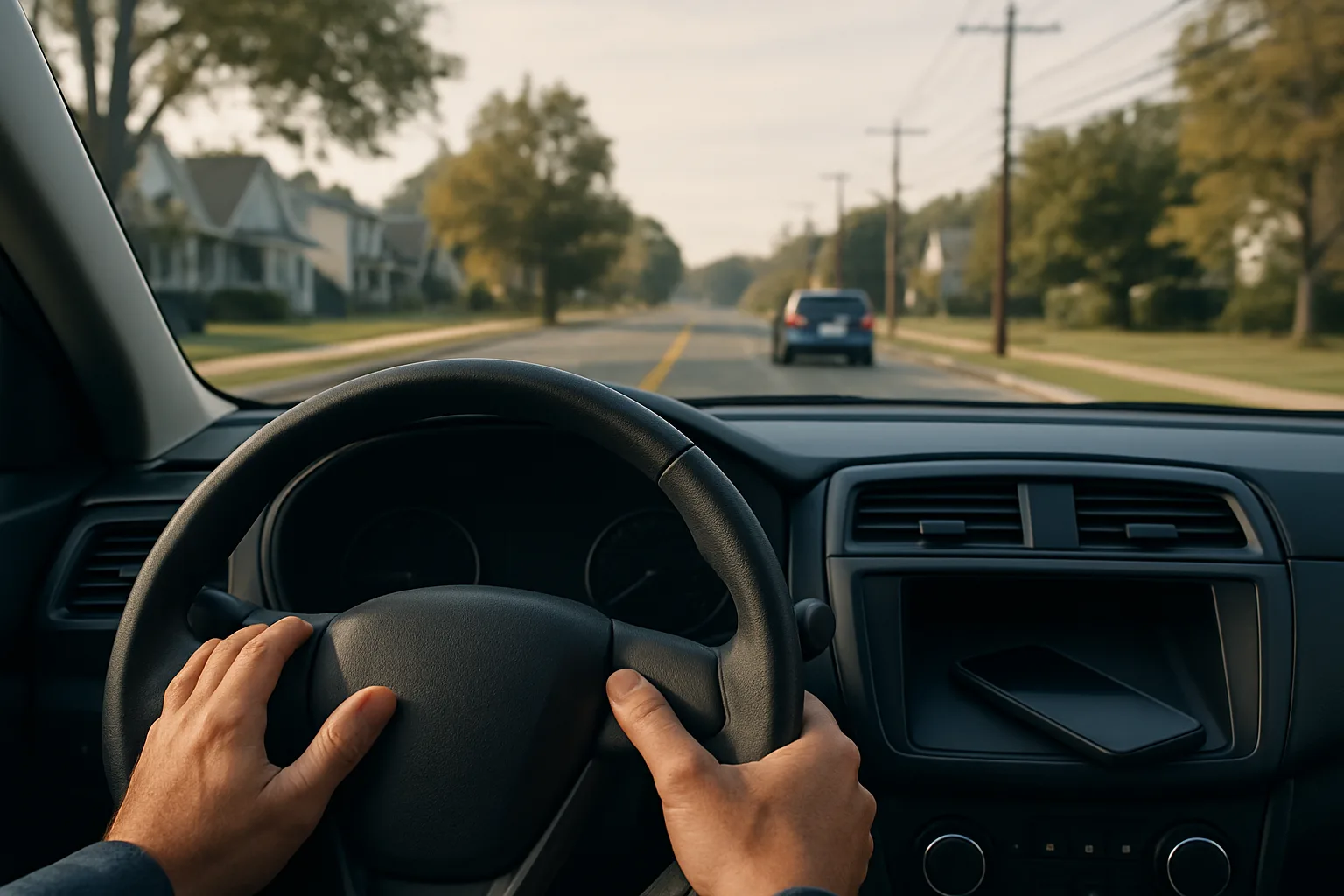
A driver may look down for only a moment before a collision occurs. Afterward, an injured person may wonder whether the other driver was texting, checking an app, or handling a phone—and whether phone records could confirm it. Understanding Maryland distracted driving accident evidence can help a crash victim preserve useful information without attempting to access another person’s private device or accounts.
The Law Offices of David Batzer can help readers understand the difference between evidence they can lawfully document themselves and information that may require formal investigation or legal process. If you are considering a Bel Air personal injury lawyer after a serious crash, an attorney may evaluate phone-use allegations alongside the road layout, vehicle damage, witness accounts, and medical documentation. This article explains what phone records may show, what they may not prove, and what steps can protect evidence after a collision in Bel Air, MD.
What Can Maryland Distracted Driving Accident Evidence Show?
Phone records can sometimes help establish whether a device was used near the time of a crash. Depending on the records available and the type of activity, they may show a call, text message, data session, or other connection. That information can support a timeline, but it does not automatically establish who was holding the phone, what appeared on the screen, or whether the activity caused the collision.
Phone records are not the whole story
A billing record may show that a communication occurred, while carrier or app-related information may provide different details. Some records may identify timing but not the substance of a message. App data can also be incomplete, difficult to interpret, or subject to retention limits. A phone’s internal settings, hands-free features, and vehicle connectivity may further affect what the records mean.
In Bel Air, MD, a distracted-driving claim generally requires more than suspicion. Investigators may compare phone-related information with the driver’s statements, witness observations, traffic-camera footage, vehicle data, road conditions, and the collision pattern. A crash reconstruction professional may assess whether the physical evidence is consistent with a driver who failed to observe traffic, but reconstruction alone may not identify the precise reason for inattention.
What victims should not do
Crash victims generally should not take another person’s phone, guess passwords, access private accounts, or ask a third party to obtain confidential records improperly. Those actions may create privacy concerns and undermine an otherwise legitimate claim. Formal requests for relevant records may be handled by attorneys, insurers, investigators, or courts, depending on the circumstances and applicable Maryland procedure.
How Can Witnesses, Police, and Vehicle Data Support a Phone Records Claim?
Phone records are often most useful when they fit with independent evidence. A witness who saw a driver looking down may provide an important observation, even if the witness cannot identify whether the driver was texting or using navigation. A nearby business or traffic camera may preserve a limited view of the vehicles, lane positions, or driver movement. Crash photographs can also help establish the location and severity of the impact.
At the scene, consider preserving information lawfully and safely by:
- Photographing vehicle positions, visible damage, road conditions, traffic controls, and nearby cameras when it is safe to do so.
- Writing down witness names and contact information, along with what each person actually observed.
- Saving your own call history, messages, photographs, dash-camera files, and location information without altering the original files.
- Recording what the other driver said, but avoiding arguments or speculation about fault.
- Following up with law enforcement if important witness information or suspected phone use was not included in the initial report.
A Maryland police report can support an injury claim by documenting officer observations, statements, citations, and basic crash information. However, a report is not automatically conclusive proof that a driver was texting. It may contain preliminary information, and later evidence may clarify or challenge it.
Vehicle systems may also provide useful information. Event data recorders can sometimes preserve information about speed, braking, or other vehicle conditions, while connected-car systems may create separate records. Availability varies by vehicle, settings, manufacturer, and preservation practices. These systems generally do not prove phone use by themselves, but they may help establish a more accurate crash timeline.
For broader guidance on preserving crash evidence after a Maryland wreck, victims can review how photographs, damaged property, video, and other materials may be protected before they are lost or changed.
What Should a Bel Air Crash Victim Do Before Phone Evidence Disappears?
The first priority after a crash is safety and appropriate medical attention. A person who feels fine immediately may still notice symptoms later, and a medical evaluation can create a record of complaints and findings. The practical steps described in what to do after a Bel Air car accident even if you feel fine may also help preserve observations and important dates.
A victim may wish to create a factual timeline while memories are fresh. Note the time and location, traffic conditions, what was visible before impact, statements made at the scene, contact with police, and when symptoms began. Keep photographs and videos in their original form, and avoid posting conclusions about the other driver on social media. If a camera may have captured the crash, record its location so counsel or an investigator can explore whether footage exists.
Why legal and insurance follow-up matters
A lawyer may assess whether phone-related information can be requested, whether additional witnesses should be interviewed, and whether a reconstruction review is appropriate. The process may involve privacy restrictions, objections, incomplete records, or disputes about what the data means. A victim is generally not required to prove the case personally before seeking guidance.
Phone-use evidence may also matter because Maryland follows a contributory negligence rule. In some cases, the other side may argue that the injured person’s own conduct contributed to the collision. Understanding Maryland’s contributory negligence rule and shared-fault evidence can help explain why consistent statements, witness details, and scene evidence matter beyond proving the other driver’s distraction.
Insurance companies may compare phone-related allegations with photographs, medical records, witness accounts, and each person’s timeline. This is why understanding how Maryland insurance adjusters evaluate crash evidence can be useful. Evidence suggesting distraction is different from evidence establishing when a phone was used and how that use contributed to the crash.
Frequently Asked Questions
Can phone records prove that a Maryland driver was texting?
Phone records may show calls, messages, or data activity near the time of a collision, but they do not always prove who used the device or whether the activity caused the crash. The records are typically considered with witness observations, police information, vehicle data, physical damage, and the surrounding timeline. The meaning of any record depends on what was obtained and how reliably it can be interpreted.
Can I request the other driver’s cell phone records myself?
A crash victim generally should not attempt to access another person’s phone, account, or private records. Phone information may be protected by privacy rules and may require a formal request, authorization, subpoena, or other lawful process. Depending on the circumstances, an attorney, insurer, investigator, or court may address whether relevant records can be sought and how they should be preserved.
What if the police report does not mention distracted driving?
The absence of a distracted-driving notation does not necessarily resolve the issue. A report may reflect only what officers knew at the scene, and witnesses or later-discovered evidence may add information. A victim can preserve witness contact details, photographs, videos, and personal observations, then ask a qualified Maryland attorney about appropriate follow-up. The report should not be altered or misrepresented.
Does suspected phone use automatically establish liability in Bel Air?
No. Phone use may be relevant to whether a driver failed to use reasonable care, but liability usually depends on the complete factual and legal record. Questions may include what the driver was doing, whether that conduct contributed to the collision, what other evidence shows, and whether any shared-fault defense is raised. Laws and procedures can vary by location and may change over time.
How The Law Offices of David Batzer Can Help
The Law Offices of David Batzer is dedicated to helping injured people understand how evidence may support a Maryland car accident claim. The firm can evaluate available photographs, witness information, police materials, medical documentation, vehicle evidence, and possible phone-use issues without encouraging clients to obtain private information improperly. Its team is committed to fighting for clients’ rights while explaining the strengths and limits of the available proof.
If you were injured in Bel Air, MD, contact The Law Offices of David Batzer for a free consultation or case evaluation. A qualified attorney can discuss your circumstances and help you explore your legal options.
The information in this article is for educational purposes only and does not constitute legal advice. Contact a qualified attorney licensed in Bel Air, MD for advice specific to your situation.