
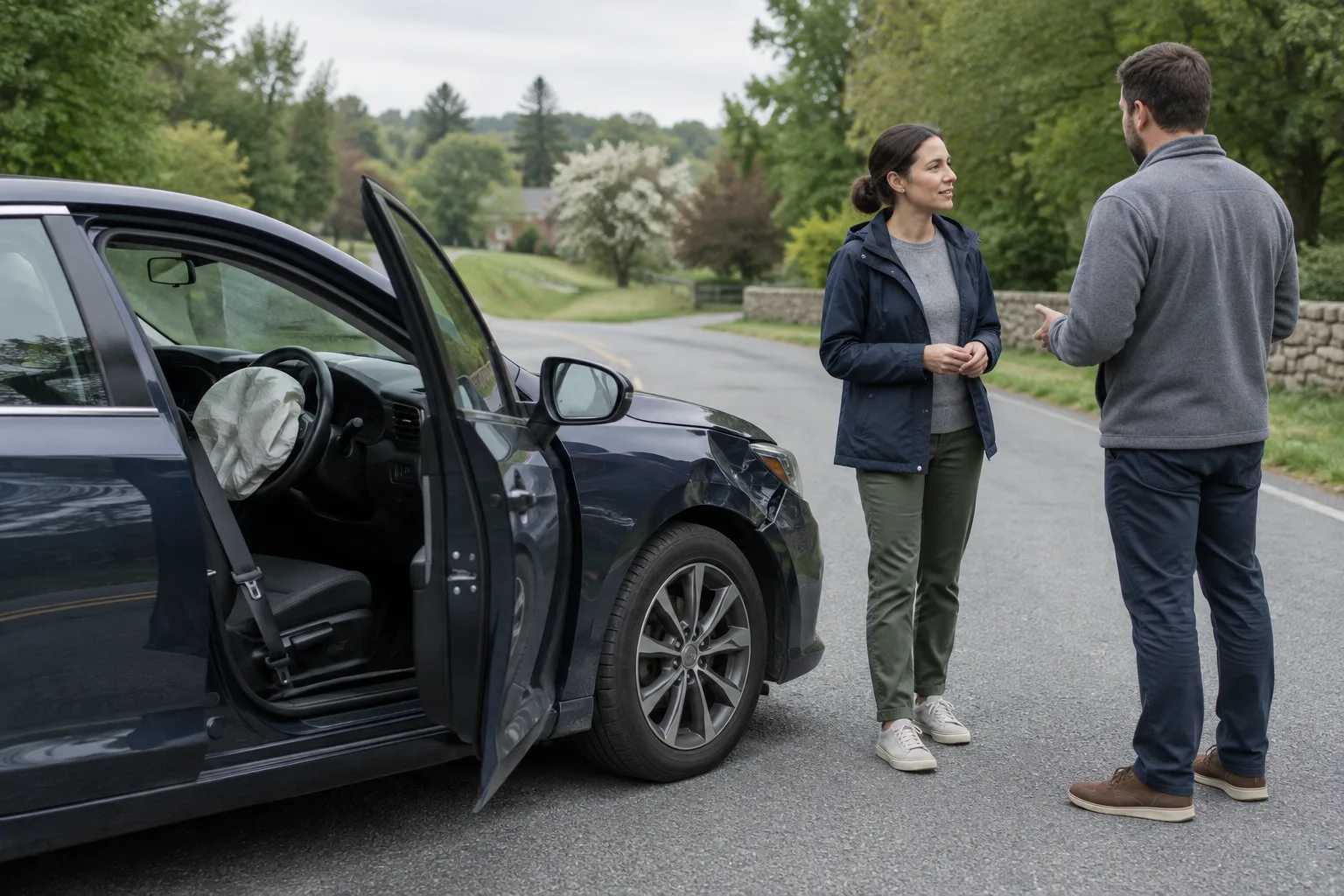
A crash can leave more than one question unanswered. A driver’s actions may have caused the collision, while an airbag that did not deploy as expected or a seat belt that allegedly failed may have affected the injuries. For someone considering a Maryland car accident product liability claim in Bel Air, MD, these are related but distinct issues: proving how the collision happened does not, by itself, establish that a vehicle component was defective.
The Law Offices of David Batzer helps people understand the evidence and legal questions that can arise after a serious crash. This guide explains how a potential claim involving an airbag or seat belt differs from a driver-fault claim, why prompt medical documentation may matter, and how preserving the vehicle and related records can support a careful investigation. Whether a separate claim is available depends on the facts and applicable law.
How a Maryland car accident product liability claim differs from a driver-fault claim
A claim against a driver generally focuses on whether that person’s conduct caused the crash and resulting harm. A potential product-liability claim asks a different question: did a vehicle or safety-system defect contribute to an injury? Depending on the evidence and legal theory, an allegation might involve a manufacturing problem, a design issue, or inadequate warnings or instructions. A malfunction alone does not establish that a product was legally defective or that the alleged defect caused an injury.
The two questions can overlap without being interchangeable. For example, evidence about speed, road conditions, impact direction, and driver actions may help explain the collision. Evidence about how the airbag or restraint system operated, the condition of a belt or buckle, and the injuries sustained may be relevant to a separate product investigation. A police report may help document the crash, but it does not, by itself, establish a component defect. For background on that distinction, read how a Maryland crash report may contribute to an injury claim.
In Bel Air, MD, as elsewhere in Maryland, an investigation may need to consider both the crash circumstances and the vehicle’s condition. Maryland’s contributory negligence rule can also make questions about a person’s conduct important to a crash-based claim. That issue is separate from whether a product defect contributed to an injury; Maryland’s contributory negligence rule and shared-fault questions may provide helpful context.
What can make a safety feature a product-liability issue?
A product claim generally requires evidence connecting a specific defect to an injury. Investigators may examine the component, the vehicle, the crash forces, and relevant technical information. The fact that an airbag did not deploy, deployed in an unexpected way, or that a belt did not restrain someone as expected is a reason to ask questions—not proof on its own that the product was defective.
Why medical records and vehicle preservation matter
Prompt medical documentation can help create a timely record of symptoms, findings, and reported events. If a person suspects a restraint system failed, describing what happened to the treating provider may help ensure the history is accurately recorded. Medical professionals—not lawyers—evaluate and document health concerns. For practical information about steps to take after a Bel Air crash when injuries are not obvious, see the firm’s related guide.
A clear record may also help distinguish injuries from the initial impact from harm that someone alleges a component worsened. Relevant materials can include medical records, follow-up notes, and personal symptom notes. Photographs may show visible injuries or the vehicle’s condition at a particular time. These materials do not decide causation by themselves, but they may help an attorney and qualified experts assess the sequence of events. For additional guidance, review ways to document accident injuries with medical records and notes.
The vehicle itself—and the allegedly involved part—may be important evidence. Repairing, dismantling, selling, or disposing of a vehicle can change or remove evidence, so preservation and inspection should be considered before those steps when a defect is suspected. The appropriate process depends on ownership, storage, insurance arrangements, and the condition of the vehicle. Guidance on preserving crash evidence after a Maryland wreck discusses broader preservation concerns.
Other potentially useful materials may include:
- Photographs of the vehicle, restraint system, and damage taken before repairs, if available.
- Repair estimates, invoices, towing records, and communications about the vehicle’s condition.
- Information about the vehicle’s make, model, year, maintenance, and prior repairs.
- Event-data information, if available and relevant. Access and retention can depend on the vehicle and circumstances, and data may require technical interpretation.
People in Bel Air and elsewhere in Harford County may also have records beyond the vehicle that help explain the crash or subsequent repairs. See evidence Maryland crash victims may be able to preserve for related examples. A careful investigation can help identify what exists without assuming that every vehicle stores the same data or that any particular record proves a defect.
Evaluating causation, responsibility, and timing
Even if an airbag or seat belt appears damaged or did not behave as expected, a product investigation must consider why. The crash’s direction and severity, whether the vehicle was occupied and positioned in a particular way, the condition and use of the restraint, and the design and operation of the system may all be relevant. Technical experts may be needed to evaluate the component and connect its condition to a specific injury. The legal significance of the evidence depends on the claim and applicable Maryland law.
A person’s medical history may also be relevant to understanding what changed after the crash. Prior injuries do not automatically prove or defeat a claim. Comparing earlier records with post-crash symptoms and treatment may help assess whether an injury was new or whether an existing condition was aggravated. The firm’s guide explains how prior injuries may affect a Bel Air crash claim.
It can help to keep the two liability questions distinct while evidence is gathered:
- Collision responsibility: What evidence shows how the crash occurred and whether a driver’s conduct contributed to it?
- Product responsibility: Is there evidence of a defect in the airbag, seat belt, or related system, and did it cause or worsen an injury?
- Injury connection: What medical and technical evidence may connect the alleged failure to the harm claimed?
These questions can involve different evidence and potentially different responsible parties. A Maryland crash investigation or claim process does not necessarily preserve a vehicle or pause a legal deadline. Filing periods can depend on the parties, claims, and circumstances, so readers should not assume that an ongoing inspection extends a deadline. For general context, see Maryland’s personal injury filing window. Laws and procedures may vary by location and may change; an attorney can assess how they apply to a particular situation.
Frequently Asked Questions
Does an airbag have to deploy in every crash?
Not necessarily. Whether an airbag deploys can depend on factors such as the crash’s direction and severity and the vehicle’s system design. A non-deployment does not, by itself, prove a defect. A technical review may be needed to evaluate how the system operated in the specific collision and whether its performance contributed to an injury.
Can I pursue a claim if another driver caused the crash?
Possibly. A claim involving a vehicle component may raise a separate question from whether another driver caused the collision. The available claims and responsible parties depend on the evidence, injury causation, and applicable law. A suspected malfunction alone does not establish liability, so an assessment may need to consider both the crash and the component’s performance.
What if the vehicle has already been repaired or sold?
That can make an investigation more difficult, but it does not automatically answer whether a claim is possible. Repair records, photographs, removed parts, communications, and other available information may still help clarify the vehicle’s condition. What evidence remains and how it can be evaluated depends on the circumstances. An attorney can review the available records and explain potential next steps.
Could a product claim involve a company other than the vehicle manufacturer?
Potentially. Depending on the facts and applicable law, an investigation may consider different entities involved in designing, manufacturing, distributing, or selling a product or component. That does not mean any particular company is responsible. Determining who may be legally accountable requires evidence about the alleged defect, the product’s history, and the connection to the injury.
How The Law Offices of David Batzer Can Help
The Law Offices of David Batzer is dedicated to helping injured people understand the issues that may follow a Maryland crash. When a seat belt or airbag is suspected of failing, the firm can review how collision evidence, medical documentation, vehicle records, and component preservation may relate to the separate questions of driver fault and product responsibility. The firm is committed to fighting for clients’ rights while evaluating each matter based on its own facts; no particular result can be promised. If you are in Bel Air or elsewhere in Harford County, contact The Law Offices of David Batzer to request a free consultation or case evaluation and discuss your situation.
The information in this article is for educational purposes only and does not constitute legal advice. Contact a qualified attorney authorized to practice in the jurisdiction that applies to your matter for advice specific to your situation. Laws vary by location and may have changed since publication.