
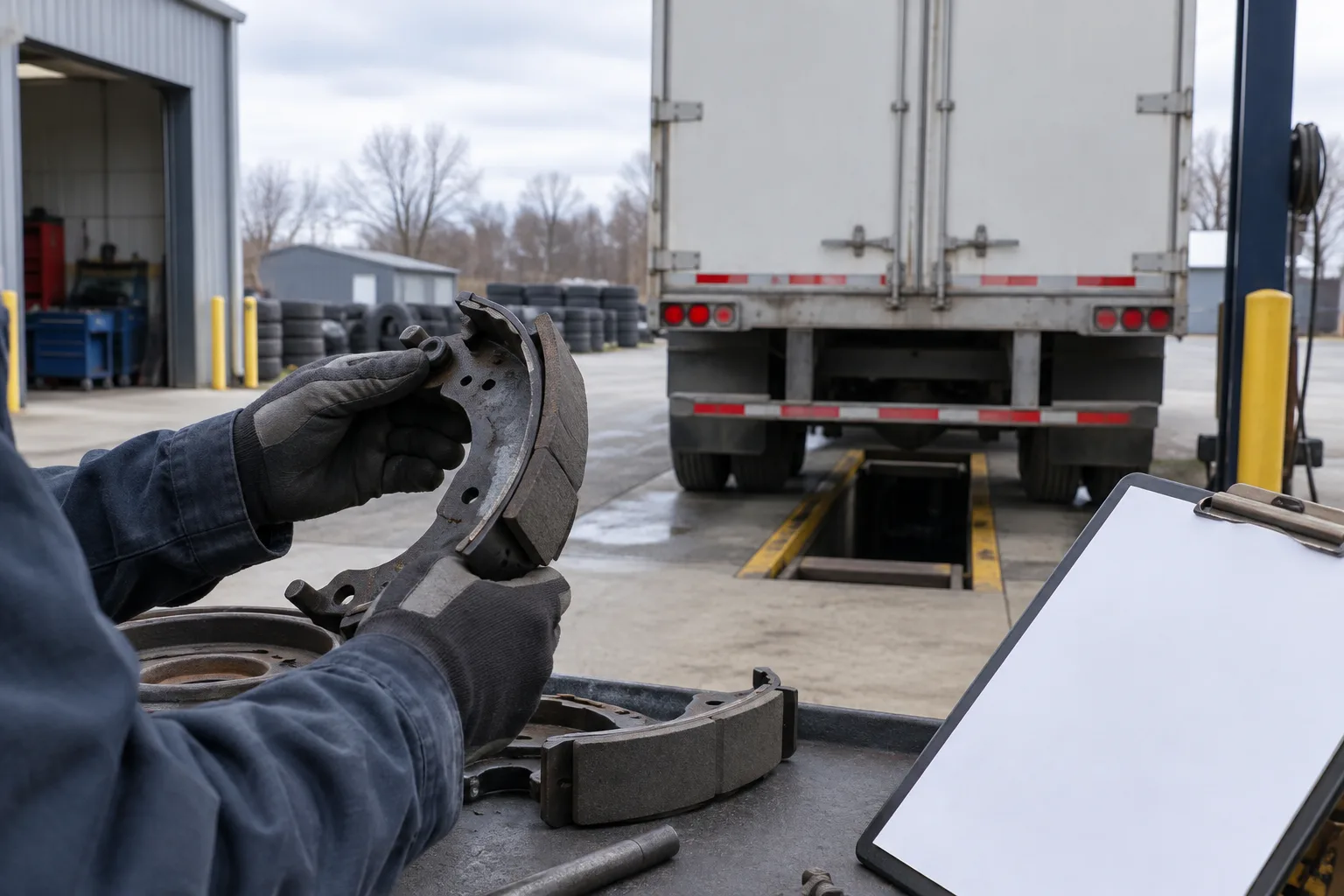
A truck’s brakes can fail for different reasons, and the cause may not be clear at the scene. After a collision in Harford County, a Maryland truck brake failure accident claim may depend in part on records showing how the vehicle was inspected, maintained, and repaired. Those documents can help explain whether a problem was reported, what work was done, and whether warning signs may have existed before the crash.
If you are injured, getting medical care and addressing immediate safety needs should come before trying to investigate the truck. For an overview of medical care and next steps after a Maryland truck crash, see our related guidance. The Law Offices of David Batzer helps people understand the evidence that may matter in a truck accident claim. This article explains which maintenance records may be relevant, what details you can record, and why prompt documentation can help preserve a clearer account of events.
Which maintenance records matter in a Maryland truck brake failure accident claim?
A single document rarely tells the whole story. Maintenance records are most useful when reviewed together with the truck’s condition, the driver’s observations, repair history, and other evidence from the crash. In Bel Air, MD, the records may be held by different parties, such as a motor carrier, vehicle owner, repair facility, or parts provider.
Potentially relevant documents may include:
- Inspection reports: Pre-trip, post-trip, periodic, or other inspection records may note brake concerns, wear, leaks, or other defects. The type of inspection and the details recorded matter.
- Repair orders and invoices: These may show what a technician examined, what work was requested or completed, and whether parts were adjusted, repaired, or replaced.
- Maintenance schedules and service histories: These can provide context about planned servicing and the truck’s previous brake work. A schedule alone does not prove that work was performed.
- Defect reports and repair communications: Driver reports, internal maintenance notes, and messages about braking concerns may help establish when a problem was noticed and how it was addressed.
- Parts and diagnostic records: Parts receipts, warranty information, and available diagnostic data may help identify what components were involved or changed.
These records can raise questions as well as answer them. A gap in a file, for example, does not by itself establish why a crash happened. The dates, descriptions, and consistency of entries should be considered alongside other evidence.
What should you document after a suspected truck brake failure?
The scene can change quickly, and an injured person may not be able to gather information. Medical attention and immediate safety come first. When it is safe and practical, notes made soon after the event may help preserve details that are difficult to recall later. In Bel Air and elsewhere in Harford County, identify the responding agency or report information if it is available; do not put yourself in danger to obtain it.
Consider recording:
- What you personally observed before, during, and after the collision, including any sounds, smells, warning lights, or apparent braking behavior. Separate what you saw from what someone else told you.
- The approximate sequence of events, locations, road or weather conditions, and anything that may have affected visibility or stopping distance.
- Names and contact information for witnesses, if they are willing to share them, along with a brief note about what each person says they observed.
- Photographs or video of vehicle positions, visible damage, the roadway, debris, and any visible truck components, taken only from a safe place. Do not touch or inspect damaged equipment.
- Medical visits, symptoms reported to health professionals, and documents related to care. Keep records accurate and avoid guessing about a diagnosis or cause.
For more on photos, witness details, and medical records after a crash, see the firm’s evidence overview. Prompt, factual notes are generally more useful than conclusions about who caused the crash.
How can maintenance records be preserved and understood?
Some important records are controlled by businesses or other people, not by the injured person. They may include paper files, electronic maintenance systems, inspection entries, repair-shop records, or communications. Identifying the truck, carrier, owner, and any known repair facility can help clarify where relevant information may be held. In many cases, an attorney can explain how preservation requests and later evidence-gathering procedures may apply under Maryland law.
Records should be read in context. A repair entry may use technical terms or refer to a particular component; a date may not reveal when a defect first developed. Comparing inspection notes, driver reports, repair work, and the physical evidence can help explain whether a brake issue was reported and when it may have been detectable. Those details may also help clarify who may be responsible for a Bel Air truck crash, which could include parties beyond the driver depending on the facts.
Other electronic information may help establish timing, but it does not answer every mechanical question. For example, electronic logging device records in a Bel Air truck crash may provide information about a vehicle’s activity or a driver’s schedule. Such records do not, by themselves, establish whether brakes were properly inspected or maintained.
A common mistake is to assume that a truck’s apparent condition, a brief conversation, or one repair invoice settles the cause. Another is waiting too long to identify records that could be changed or lost through ordinary business practices. Learn more about Maryland crash evidence preservation steps. The evidence available and the rules governing a claim depend on the circumstances; Maryland law may differ from laws elsewhere and can change.
Frequently Asked Questions
Do maintenance records prove that a truck’s brakes caused a crash?
Not by themselves. Maintenance records may show inspections, reported concerns, or repair work, but they need to be considered with the crash circumstances and other evidence. A record that mentions a brake issue does not automatically establish that it caused the collision. Conversely, a file without an obvious warning may not resolve whether a defect existed. The meaning depends on the details and context.
What if I do not know the trucking company or truck owner?
You may not have all the identifying information at the scene. A crash report, photographs, witness information, or details recorded by responding personnel may help identify the truck or carrier. Avoid approaching an unsafe scene to collect information. Depending on the circumstances, an attorney may be able to explain ways to identify relevant parties and records in a Maryland claim.
Can a repair shop’s records matter if the truck’s brakes were serviced recently?
They may. A repair order could describe the customer’s concern, the inspection performed, parts replaced, or work recommended but not completed. The timing and wording can be important, but a recent service date alone does not establish that the work was adequate or that a later failure was foreseeable. The records should be evaluated with other evidence about the vehicle and crash.
Should I keep notes if I am still receiving medical care?
If you can do so without interfering with care, factual notes can help preserve your recollection of the event and the timing of your medical visits. Keep copies of relevant records and avoid adding assumptions about the cause of symptoms or the crash. Medical questions should be discussed with a qualified health professional. An attorney can explain what information may be relevant to a claim based on your circumstances.
How The Law Offices of David Batzer Can Help
The Law Offices of David Batzer is dedicated to helping injured people understand the evidence involved in truck accident claims. A review may include available inspection, maintenance, and repair information, alongside scene documentation, witness accounts, and other relevant records. The firm is committed to fighting for clients’ rights and can evaluate what questions the evidence may raise in a particular situation. If a truck crash in Bel Air or elsewhere in Harford County has affected you, contact The Law Offices of David Batzer to discuss your circumstances and request a free consultation or case evaluation.
The information in this article is for educational purposes only and does not constitute legal advice. Contact a qualified attorney authorized to practice in the jurisdiction that applies to your matter for advice specific to your situation.