
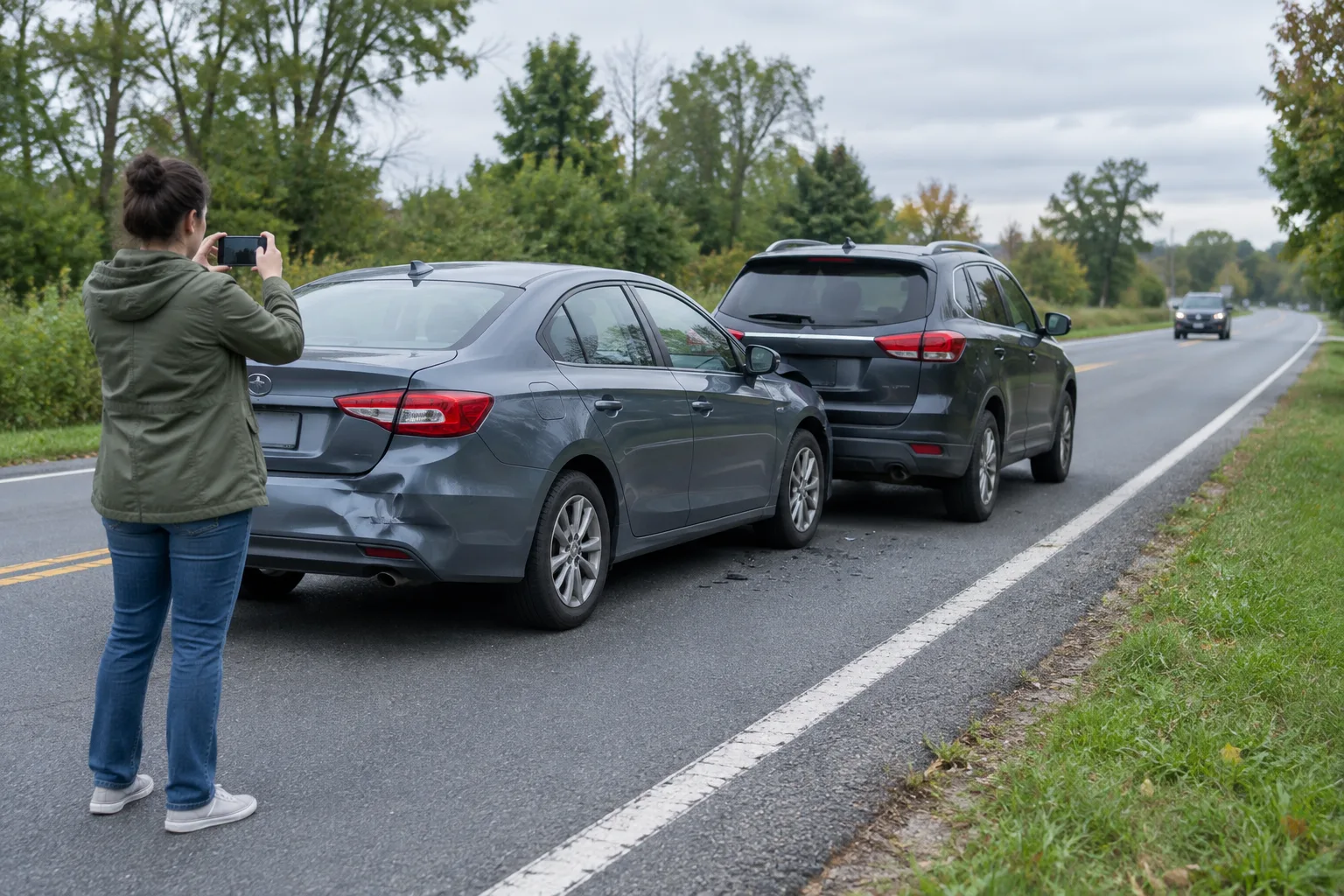
A rear-end crash can seem easy to explain: one vehicle struck another from behind, so the rear driver must be responsible. But in Bel Air, MD, the point of impact is only one part of the story. A sudden stop, a chain of impacts, an unsafe following distance, or conflicting accounts of what happened just before the collision can make fault a disputed issue. The Law Offices of David Batzer helps readers understand the questions that may matter when a crash’s sequence is unclear. This article covers why fault should not be assumed from the crash type, what evidence can help clarify events, and how Maryland rules may affect an injury claim. A careful account can matter when an insurer or another party questions how the collision unfolded.
Why a Bel Air rear-end crash does not automatically establish fault
Rear drivers are expected to pay attention and leave enough space to respond to traffic. Evidence that a driver followed too closely or failed to react may support an argument that the driver acted carelessly. Still, the fact that one vehicle struck another from behind does not, by itself, answer every question about how the collision happened. Batzer Law’s overview of rear-end collisions offers additional background on this type of crash and its potential consequences.
The sequence of events matters
Drivers may disagree about whether the front vehicle stopped suddenly, whether the rear vehicle had time to react, or whether another car contributed to the incident. A vehicle may also be pushed into the car ahead after being struck from behind. In a multiple-impact crash, determining which contact caused particular damage can require more than looking at the final positions of the vehicles.
A sudden stop does not automatically excuse the rear driver, just as an abrupt maneuver does not automatically establish the front driver’s fault. The surrounding facts—including traffic, visibility, speed, spacing, and any warning—can help put the events in context. In Bel Air, those details may be relevant whether a crash occurred on a local street or a busier route through Harford County. Fault is assessed from the available evidence and applicable law, not from the label “rear-end collision” alone.
What evidence can clarify Maryland rear-end accident fault?
Prompt, accurate documentation may help preserve details that could otherwise be difficult to recall or obtain later. When it is safe to do so, relevant information may include photographs of vehicle positions and damage, roadway conditions, debris, skid marks, and visible traffic controls. Save available dash-camera footage and note the names and contact details of witnesses. These are among the steps for preserving crash evidence after a Maryland wreck that may help clarify a disputed sequence.
A police report can record statements, observations, and other information gathered at the scene. It may be useful, but it is not necessarily a complete account or the final decision on fault. Readers can review how police reports may factor into a Bel Air injury claim to understand why a report should be considered alongside other available evidence.
Evidence may also address what each driver was doing before impact. For example, phone records that may help investigate distracted driving could be one avenue to explore, but device information alone does not prove that distraction caused a crash. Depending on the circumstances, vehicle damage, witness accounts, video, and the timing of events may all need to be evaluated together. Preserve original files where possible, and avoid altering or deleting relevant material.
Why disputed fault and injury documentation matter
Maryland applies a contributory negligence rule. In general, if an injured person’s own negligence contributed to the crash, that may prevent recovery under Maryland law, subject to the facts and any applicable legal principles. That makes claims about a driver’s conduct important to examine carefully rather than accept without context. Read more about Maryland’s contributory negligence rule and shared-fault questions.
A careful review may compare each account with physical evidence and the timing of events. Questions could include whether a driver had room to stop, whether the vehicles were involved in more than one impact, and whether a claimed sudden maneuver is consistent with the scene evidence. A Bel Air rear-end accident lawyer may help assess what information is relevant, but no general description can determine fault in a particular case.
Injury records are another part of the overall picture. A person may not notice every symptom immediately after a collision, and the timing and description of symptoms can be important when an injury claim is evaluated. Keep a factual record of when symptoms arise and of medical visits or other relevant care. For practical context, see next steps after a Bel Air car accident when you initially feel fine. Medical questions should be directed to a qualified health professional; a legal article cannot diagnose an injury or recommend treatment.
Frequently Asked Questions
Can the front driver be at fault in a rear-end crash?
Possibly. The rear impact does not automatically establish that the front driver caused the collision, but the front driver’s actions may be relevant depending on the evidence. For example, accounts of a sudden maneuver or a sequence involving several vehicles may need to be compared with witness statements, video, and damage. Fault is fact-specific, and Maryland law may affect how each driver’s conduct is evaluated.
What if another vehicle caused the rear-end collision?
A chain reaction can make the sequence of impacts important. A vehicle may be pushed into another car after being struck, or more than one driver’s actions may be relevant. The number and position of vehicles, damage patterns, witness accounts, and available recordings may help investigators understand what happened. Avoid assuming that the last vehicle in line is the only one whose conduct matters.
Does a police report decide who is at fault?
A police report may document observations and statements, and it can be one useful source of information. However, it may not include every detail, resolve disagreements between drivers, or determine the outcome of an insurance or legal claim. Other evidence—such as photographs, video, witness accounts, and vehicle damage—may add context. How much weight a report receives depends on the circumstances and applicable law.
Can I make a claim if the insurer disputes how the crash happened?
A disagreement about the collision’s sequence does not, by itself, answer whether a claim may be brought or what its value might be. The available evidence, injuries, insurance coverage, and Maryland law can all matter. Because Maryland’s contributory negligence rule can make each driver’s conduct significant, an attorney licensed in Maryland can review the particular facts and explain possible options without promising a specific result.
How The Law Offices of David Batzer Can Help
The Law Offices of David Batzer is committed to helping injured people understand the issues that can arise after a Bel Air rear-end collision. The firm can evaluate available information, identify questions about the sequence of impacts or disputed accounts, and explain how Maryland law may apply. A review may also help identify relevant records or evidence to consider, based on the circumstances. Every collision is different, and no particular result can be promised. If you have questions about a rear-end crash or injury claim, contact The Law Offices of David Batzer to request a free consultation or case evaluation.
The information in this article is for educational purposes only and does not constitute legal advice. Contact an attorney licensed to practice in Maryland for advice specific to your situation.