
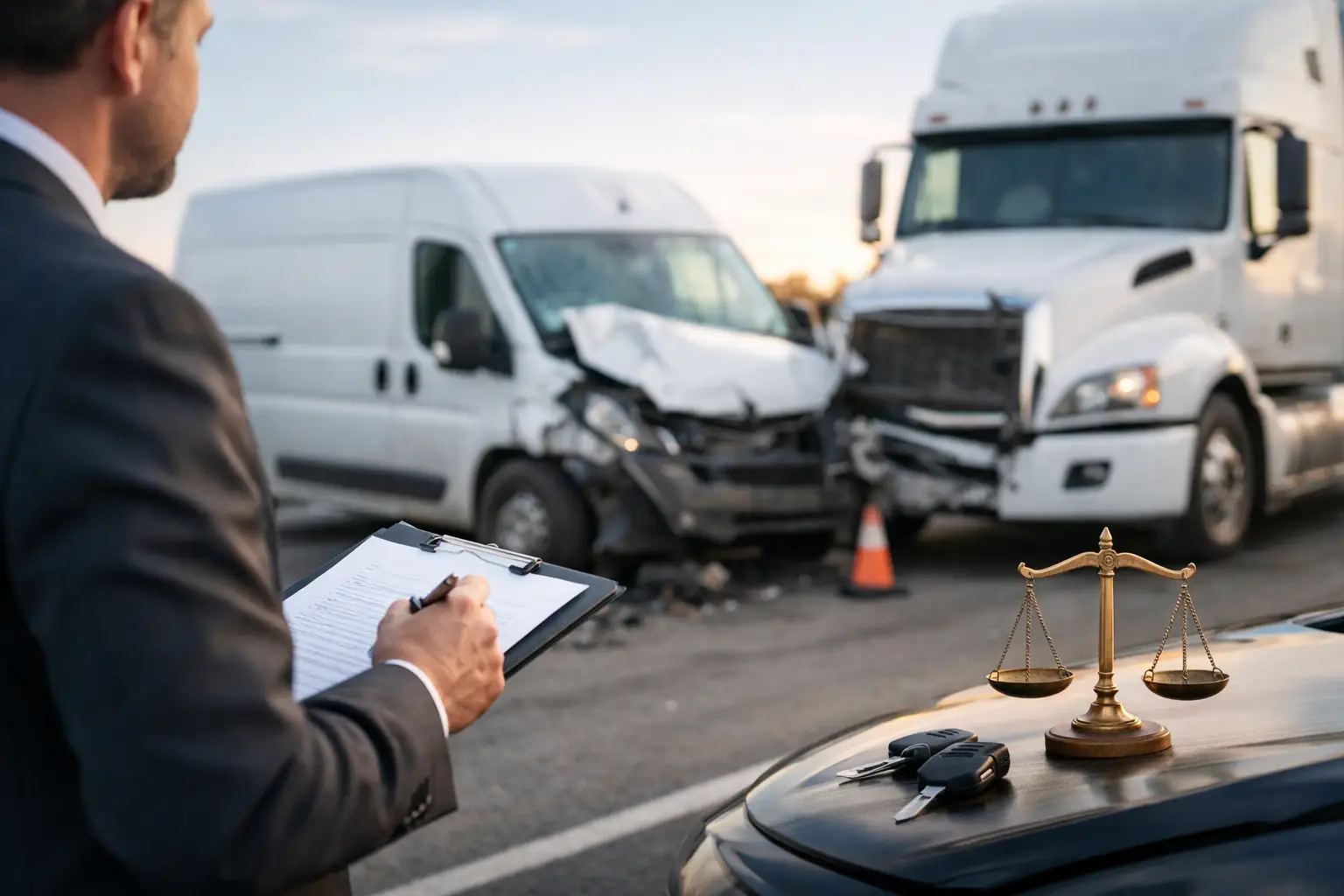
A commercial vehicle accident lawyer can become essential within hours of a crash involving a work truck, delivery van, utility vehicle, bus, or other business-owned vehicle. These collisions often cause serious injuries, but the legal issues are also more complicated than a typical two-car accident. The driver may not be the only responsible party. A company, contractor, vehicle owner, maintenance provider, or manufacturer may share liability.
After a commercial vehicle crash, the insurance company may begin building its defense before you have left the emergency room. You should not have to manage adjusters, paperwork, medical treatment, and lost income while trying to prove what happened. Prompt legal representation can help protect the evidence and put pressure on the parties responsible for your losses.
Why Commercial Vehicle Crashes Are Different
A commercial vehicle is used for business purposes. It may be a tractor-trailer, box truck, delivery vehicle, construction truck, rideshare vehicle, shuttle, company car, or a fleet vehicle operated by a contractor. The size of the vehicle matters, but so does the business relationship behind it.
A driver who causes a crash while working may have been speeding to meet a delivery deadline, using a phone for work, driving while fatigued, or operating a poorly maintained vehicle. The employer may be responsible for the driver’s conduct, particularly when the driver was performing job duties at the time of the collision. But every case depends on the facts. A company may argue that its driver was an independent contractor or was not on duty, even when the company exercised significant control over the work.
Commercial crashes also tend to involve more insurance coverage and more aggressive insurance defense. That does not automatically mean an injured person receives fair compensation. It often means the case will be scrutinized from the beginning.
What a Commercial Vehicle Accident Lawyer Investigates
The police report is important, but it is rarely the full story. A serious claim requires a close review of the evidence that shows how the crash happened and who had a role in causing it.
A commercial vehicle accident lawyer may seek company records, driver qualification files, inspection and maintenance documents, dispatch communications, delivery schedules, photographs, witness statements, and available video footage. For larger trucks, electronic logging data and vehicle data systems may reveal how long the driver had been on the road, the vehicle’s speed, braking activity, or other critical information before impact.
Some of that evidence can disappear quickly. Video may be overwritten. A damaged vehicle may be repaired. Electronic data may not be retained indefinitely. A lawyer can take steps to demand preservation of relevant evidence before it is lost or altered.
The investigation may also focus on whether the business hired a qualified driver, trained the driver properly, required unsafe scheduling, ignored prior safety problems, or allowed a vehicle to remain in service despite known defects. Liability is not always limited to the person behind the wheel.
Who May Be Responsible for Your Injuries?
Maryland injury claims involving commercial vehicles can involve several defendants and insurers. Identifying every responsible party matters because a serious injury can create medical bills and wage losses that exceed one policy limit.
Potentially responsible parties can include the commercial driver, the driver’s employer, the vehicle owner, a trucking or transportation company, a contractor, a maintenance company, a cargo-loading company, or a manufacturer of a defective vehicle part. In some cases, unsafe road conditions or a third-party driver’s actions also play a role.
For example, a delivery driver may run a red light, but the case may also raise questions about whether the delivery company created an unreasonable route or schedule. A truck may lose control because of a tire failure, which can require an investigation into inspection records, maintenance work, and the product itself. The facts determine the claim. A careful investigation protects against accepting an explanation that serves the company rather than the injured person.
The Compensation at Stake After a Serious Crash
The financial harm from a commercial vehicle collision can continue long after the vehicles are removed from the road. Emergency treatment, surgery, rehabilitation, medication, and follow-up care can create significant expenses. If your injury prevents you from returning to your job, lost wages may quickly add pressure to an already difficult situation.
A claim may seek compensation for medical expenses, future treatment needs, lost income, reduced earning ability, pain and suffering, and property damage. When a crash causes a fatal injury, surviving family members may have grounds to pursue a wrongful death claim and other damages under Maryland law.
The value of a case depends on the severity of the injuries, available evidence, insurance coverage, the effect on work and daily life, and whether the injured person has reached maximum medical improvement. It is usually a mistake to accept an early settlement before the full medical and financial impact is understood. An insurer’s first offer may be designed to close the claim cheaply, not to cover the care and income you will need over time.
What to Do After a Commercial Vehicle Collision
Your health comes first. Seek medical care promptly, follow treatment recommendations, and tell your providers about every symptom you experience. Pain from neck, back, head, shoulder, or knee injuries may become more apparent in the days after a crash, and consistent medical documentation can be important to both your recovery and your claim.
If you can do so safely, preserve practical information from the scene. Take photographs of the vehicles, road conditions, visible injuries, license plates, company names, and identifying numbers on the commercial vehicle. Get the names and contact information of witnesses. Keep copies of medical bills, work restrictions, repair estimates, and letters from insurance companies.
Do not give a recorded statement to the other party’s insurer without understanding the risk. Adjusters may sound helpful, but their responsibility is to the insurance company. They may ask questions that minimize the injury, shift blame, or create confusion about what occurred. You also should avoid posting about the crash, your injuries, or your activities on social media while a claim is pending.
Maryland Rules Can Make Timing Critical
Maryland follows a strict contributory negligence rule. In many cases, if an injured person is found even partly at fault for causing the crash, recovery may be barred. Insurance companies know this rule and may look for any argument that shifts blame to the victim.
That makes evidence especially important. A commercial vehicle accident lawyer can challenge unsupported accusations, review the physical evidence, and present a clear account of how the collision occurred. Waiting too long can make that work harder as witnesses become unavailable and records disappear.
There are also deadlines for filing a lawsuit, and special notice requirements can apply when a government-owned vehicle or public entity is involved. The right deadline depends on the circumstances, so it is wise to get legal advice as soon as possible rather than relying on an insurer’s description of your rights.
Direct Representation When a Company Pushes Back
Commercial carriers and business insurers handle claims every day. They have adjusters, investigators, and lawyers working to reduce what the company pays. Injured people deserve someone focused on their side of the case.
Batzer Law represents Maryland accident victims with the personal attention serious cases require. David Batzer works directly with clients to address questions, develop the evidence, and pursue the compensation needed after a commercial vehicle collision. When an insurer refuses to be reasonable, preparation for litigation can make a meaningful difference.
If a business vehicle has disrupted your health, your work, or your family’s financial security, getting answers early can protect more than a claim. It can give you room to focus on healing while someone fights to hold the right parties accountable.