
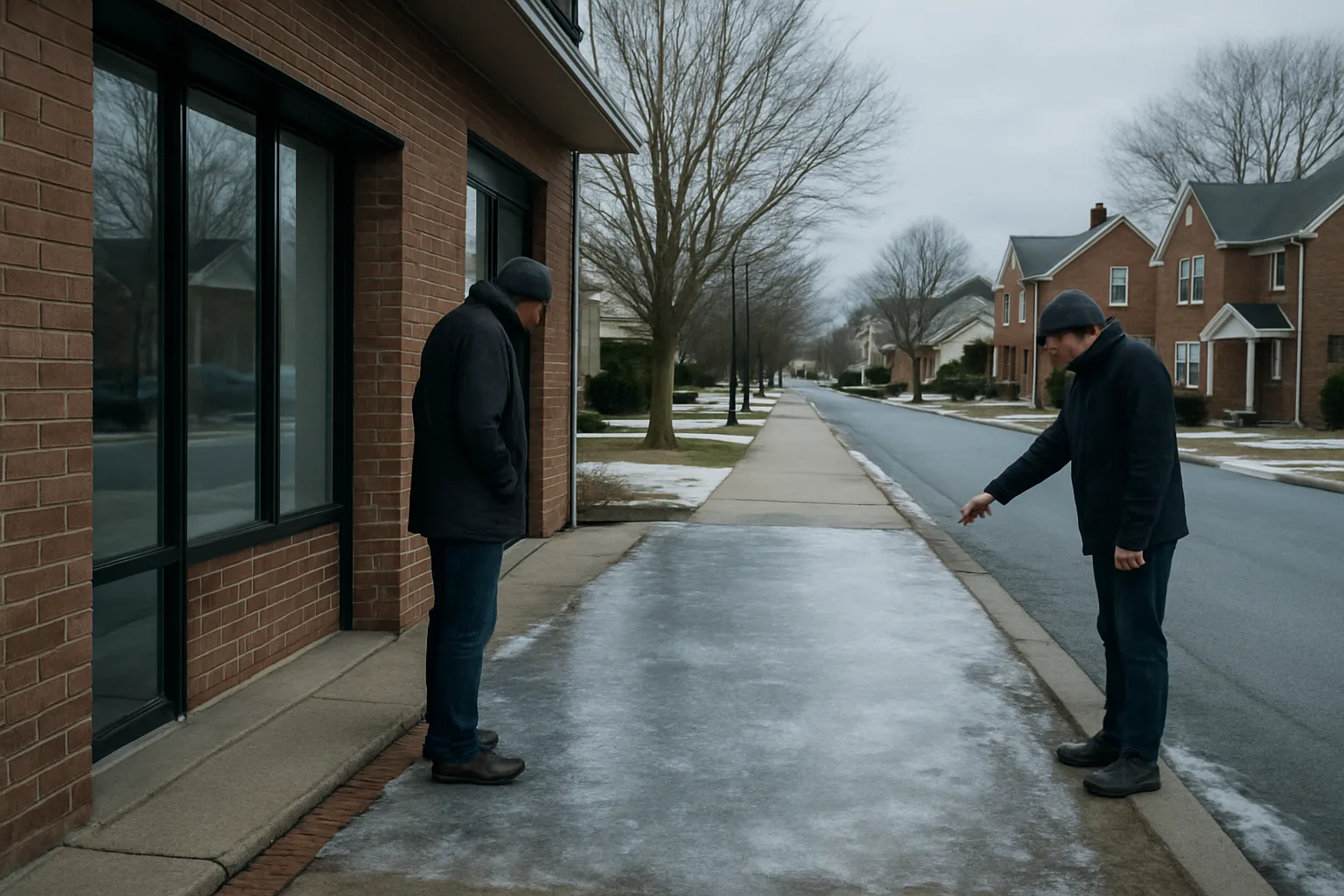
A slick patch on a Bel Air sidewalk can be difficult to see, especially after a freeze, refreeze, or light snowfall. A fall may happen outside a store, apartment building, office, home, or public walkway, and the person responsible is not always obvious. Understanding who controlled the area and what they knew about the condition is often central to a Maryland slip and fall on ice claim.
For an overview of the issues that can affect Maryland sidewalk fall injury liability, readers can review the related resource from The Law Offices of David Batzer. The firm helps injured people understand the evidence and legal questions that may apply. This article explains potential responsible parties, notice and weather timing, practical evidence to preserve, and communications that may affect a claim.
Who May Be Responsible for an Icy Sidewalk Fall in Bel Air?
Responsibility generally depends on more than who owns the building next to the sidewalk. In Bel Air, MD, the relevant questions may include who possessed or controlled the walkway, who had a duty to inspect or maintain it, whether that party knew or reasonably should have known about the ice, and whether the condition was created or left unaddressed.
Possible responsible parties
Depending on the location, a claim may involve:
- A commercial property owner or business operator
- A landlord, tenant, or property management company
- A snow- and ice-removal contractor
- A homeowners’ association or other entity responsible for common areas
- The Town of Bel Air, Harford County, or another public entity, subject to applicable notice rules, immunities, and procedural requirements
A lease, maintenance contract, site policy, or municipal responsibility may shift practical duties between these parties. That does not automatically determine legal liability, but those records can help identify who had control. The broader framework for Maryland premises liability claims involving unsafe property conditions may help explain why ownership and control are separate questions.
Natural accumulation versus a created hazard
Maryland cases can require careful analysis of whether ice formed naturally or resulted from human activity. For example, water discharged from a downspout, a leaking pipe, or repeated plowing that pushed meltwater into a walking path may present different facts from ordinary snow or ice that accumulated during a storm. The timing of inspection, treatment, and removal can also matter.
No single fact decides every snow and ice accident in Bel Air. Weather records, photographs, prior complaints, witness accounts, and maintenance logs may help establish how long the condition existed and whether reasonable precautions were possible.
What Evidence Can Support a Maryland Slip and Fall on Ice Claim?
Evidence can disappear quickly. Snow may melt, ice may be salted, footwear may be discarded, and surveillance footage may be overwritten. A practical record of the scene can help an attorney evaluate whether a property owner, tenant, contractor, or public entity may have had notice of the hazard.
Build an evidence record promptly
When reasonably possible, preserve or gather:
- Scene photographs: Photograph the ice, surrounding sidewalk, lighting, slope, drainage, warnings, handrails, and any nearby entrances. Take wider images showing the location and closer images showing the condition itself.
- Weather information: Note the time of the fall and recent precipitation, temperature changes, freezing conditions, and thawing. Public weather data, forecasts, and National Weather Service records may help establish timing, but an attorney can assess which sources are appropriate.
- Incident reports: Report the fall to the store, landlord, manager, or relevant public agency and request that the report accurately reflect what happened. Keep a copy or record of the report if available.
- Witness details: Gather names and contact information for people who saw the fall, observed the ice beforehand, or know about earlier complaints or maintenance activity.
- Footwear and clothing: Preserve the shoes and clothing worn during the incident without cleaning, altering, or discarding them. Their condition may become relevant if someone argues that footwear or clothing contributed to the fall.
- Medical documentation: Seek appropriate medical attention and keep records of visits, restrictions, bills, symptoms, and follow-up. Guidance on how to document injuries with photographs and medical records can help organize this material.
Visit the property again only if it is safe and lawful to do so; do not create additional risk while attempting to photograph a changed condition.
Rental properties and managed sites
At an apartment complex or commercial rental, the owner may not be the only party with relevant responsibilities. Leases, tenant complaints, maintenance requests, snow-removal contracts, work orders, and property-manager communications may show who was expected to inspect or treat common areas. This evidence for a Bel Air rental property injury claim may be especially important when several entities share control.
What Should You Do After a Snow and Ice Accident in Bel Air?
A person who falls may be embarrassed, in pain, or unsure whether the condition is serious. The following steps are general evidence-preservation measures, not a substitute for individualized legal advice:
- Report the incident factually to the responsible business, landlord, manager, or agency. Avoid guessing about who caused the ice or making statements that minimize an injury.
- Obtain appropriate medical evaluation. Symptoms can change, and medical records may help connect the reported condition to the fall.
- Preserve photographs, footwear, receipts, transportation records, medical paperwork, and written communications in one location.
- Ask the property owner or business to preserve relevant surveillance footage and maintenance records. Do not assume footage will be retained automatically.
- Keep emails, letters, claim forms, and calls from an insurer or claims administrator. Before signing a release or giving a recorded statement, consider obtaining advice about what it means.
These steps to take after a Maryland slip and fall can help create a clearer record. Communications should remain accurate and limited to known facts. A person does not need to determine legal fault at the scene.
Could your own conduct affect the claim?
A property owner or insurer may argue that the injured person did not watch where they were walking, wore unsuitable footwear, ignored a warning, or chose an unsafe route. Maryland follows a contributory negligence rule that can make shared-fault arguments significant. The application depends on the facts, so a reader may wish to review Maryland contributory negligence and shared fault rules.
Photographs of visibility, lighting, warnings, footwear, and the available path may help place those arguments in context. Avoid altering the scene or deleting messages that could later provide relevant information.
How evidence may affect claim evaluation
Liability evidence is only one part of a claim. Medical documentation, the nature and duration of the injury, lost income, out-of-pocket costs, insurance coverage, and disputed fault may all affect evaluation. These factors that affect a Maryland slip and fall settlement are not a promise of any particular result, but they explain why organized records matter.
Frequently Asked Questions
Is a landlord always responsible for ice on an apartment sidewalk?
No. Responsibility may depend on the lease, property layout, control of common areas, maintenance practices, and any snow-removal agreement. A landlord, tenant, manager, contractor, or another entity may have different roles. The existence of ice alone does not establish liability. In Bel Air, the facts and applicable Maryland law must be evaluated together, including whether the responsible party had notice and a reasonable opportunity to address the condition.
Can I bring a claim if I did not take pictures immediately?
Possibly. Photographs are useful, but they are not the only form of evidence. Witnesses, incident reports, surveillance footage, weather records, maintenance logs, footwear, medical records, and later photographs may help document the event. The condition may have changed, so prompt reporting and preservation efforts can still matter. An attorney can evaluate what evidence remains and how it may support or weaken the claim.
What if a store or insurer asks me to sign paperwork?
Read the paperwork carefully and keep a copy. An incident report, medical authorization, recorded statement, or release may have different effects. Give accurate factual information, but avoid speculation about fault or the full extent of future injuries. Before signing a release or agreeing to a recorded statement, a person may consider consulting a licensed Maryland attorney about the specific document and circumstances.
Are public sidewalks treated differently from private walkways?
They can be. A public sidewalk may involve the Town of Bel Air, Harford County, or another public entity, while a private walkway may involve an owner, tenant, manager, or contractor. Public-entity claims may include additional notice, immunity, and procedural issues. The responsible agency and applicable rules depend on the exact location, ownership, and jurisdiction, so prompt legal evaluation can be important.
How The Law Offices of David Batzer Can Help
The Law Offices of David Batzer is dedicated to helping injured people examine the facts behind winter premises incidents. The firm can review photographs, weather timing, incident reports, witness information, maintenance records, medical documentation, and communications with a property owner or insurer. It can also assess questions involving rental properties, contractors, municipalities, notice, and contributory negligence.
Because insurers may evaluate claims using their own processes, readers may benefit from understanding how Maryland insurance adjusters evaluate injury claims. The firm is committed to fighting for clients’ rights while providing a clear assessment of available legal options. Contact The Law Offices of David Batzer for a free consultation or case evaluation.
The information in this article is for educational purposes only and does not constitute legal advice. Contact a qualified attorney licensed in Bel Air, MD for advice specific to your situation.