
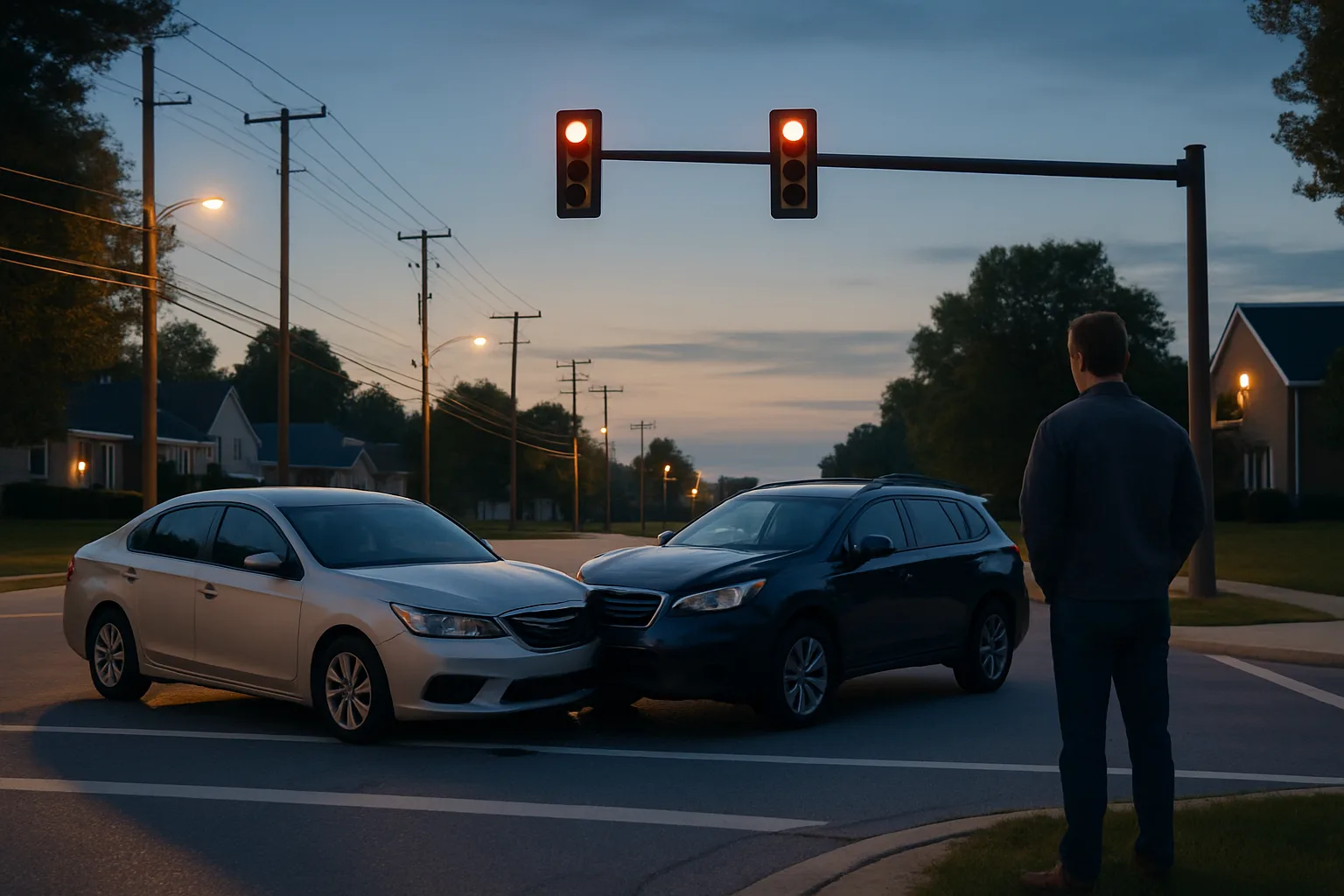
Left-turn crashes can happen in a few seconds, but the question of who had the right of way may take much longer to sort out. One driver may say the turn was protected by a green arrow, while the other says the light had changed or the turning vehicle entered the intersection against traffic. A Bel Air left-turn accident lawyer may examine those competing accounts alongside video, vehicle damage, witness statements, and medical records.
If you were injured, a Bel Air personal injury lawyer after an accident may help you understand how evidence, insurance issues, lost income, and injury documentation fit together. The Law Offices of David Batzer can serve as a knowledgeable guide while the facts are investigated. This article explains why fault disputes arise, what information may clarify an intersection collision, and what mistakes can make the evidence harder to evaluate.
Why Do Bel Air Left-Turn Crashes Create Competing Fault Stories?
A left-turn collision often involves two vehicles moving through the same space from different directions. The turning driver may believe a protected signal authorized the maneuver. The oncoming driver may believe the turn was unprotected and that the oncoming vehicle had priority. Both drivers may remember the event differently, especially when the collision happens quickly or visibility is limited.
Signal phase and right of way
A green light does not always mean a driver has an unrestricted right to turn left. A driver may need a protected green arrow, or may have to yield to oncoming traffic when turning on a standard green signal. The exact signal phase, lane position, and movement of other vehicles can matter. Signal timing may also be relevant if the light changed while a vehicle was entering or clearing the intersection.
Speed, visibility, and vehicle positions
The oncoming driver’s speed may become a disputed issue. A turning driver may say the other vehicle was traveling too fast to avoid, while the oncoming driver may say the turn began suddenly. Sight obstructions, weather, darkness, roadway grade, and the position of vehicles before impact can affect how each account is assessed. Damage location and final resting positions may also help test the descriptions. Readers can review Maryland side-impact collision information when a left-turn crash produces a T-bone or other side-impact impact pattern.
What Evidence May Clarify a Bel Air Traffic Signal Accident?
No single piece of evidence necessarily resolves an intersection collision. Investigators, insurers, and attorneys may compare several sources to determine whether the physical evidence supports one account, another account, or an uncertain conclusion. In Bel Air, MD, the relevant records may come from the investigating agency, nearby businesses, roadway cameras, vehicle systems, and witnesses.
Potentially useful information may include:
- Dashcam, nearby security-camera, or other video footage showing the signal phase, vehicle paths, or timing.
- Photographs of the intersection, signal heads, lane markings, sightlines, debris, skid marks, and vehicle damage.
- Eyewitness names and contact information, along with what each person actually observed rather than assumptions about fault.
- Event-data or vehicle-system information, when available and legally obtainable, concerning speed, braking, or deployment events.
- The crash report, citations, driver statements, roadway observations, and any diagram prepared by the investigating officer.
Prompt preservation matters because video can be overwritten and vehicles may be repaired or moved. A person involved in a crash can review how to preserve evidence after a Maryland wreck for general information about protecting photographs, recordings, witness details, and other materials.
The role and limits of a police report
A report from a Bel Air-area investigating agency may provide an important starting point. It may record statements, apparent roadway conditions, witness information, and whether a citation was issued. However, an initial report is not necessarily the final word on civil liability. Officers may arrive after vehicles have moved, may not see the signal phase, or may have limited information from witnesses. The report is often most useful when compared with independent video, photographs, vehicle positions, and later testimony. This is why understanding police reports in Maryland injury claims can be important in a disputed case.
How Can Disputed Fault Affect a Maryland Injury Claim?
A fault dispute is not limited to deciding which driver received a citation. Insurance adjusters may compare the signal evidence, damage pattern, statements, speed allegations, and medical documentation when evaluating a claim. They may also look for contradictions, unexplained gaps, or statements made before all facts were known. General information about how Maryland insurance adjusters evaluate crash claims may help explain why consistency across the record matters.
Maryland generally follows a contributory negligence approach. In broad terms, evidence that an injured person also contributed to the crash may become legally significant. For example, an insurer might question whether the person was speeding, distracted, failed to keep a proper lookout, or entered on an unfavorable signal. The effect of that evidence depends on the facts and applicable Maryland law. A reader can review Maryland’s contributory negligence rule for a general explanation, but an attorney should evaluate how the rule applies to a particular claim.
Injury records are part of the evidence
Fault is only one part of a personal injury claim. Medical records may help connect symptoms, treatment, restrictions, and claimed losses to the collision. Some symptoms may not be obvious immediately, and feeling fine at the scene does not establish that no injury occurred. Depending on the circumstances, a person may find it useful to review next steps after a Bel Air car accident when you feel fine and how to document accident injuries for a claim. Documentation can include medical records, work restrictions, photographs, and a factual record of changing symptoms.
Frequently Asked Questions
Does a green light automatically give a driver the right to turn left?
Not necessarily. In Maryland, the meaning of a green signal can depend on whether the driver had a protected green arrow or a standard green light requiring the driver to yield to oncoming traffic. The lane configuration, signal phase, and movement of other vehicles may also matter. The facts should be reviewed together rather than inferred from a driver’s color description alone.
Can a driver be at fault if the other vehicle was speeding?
Potentially, but speeding does not automatically resolve a left-turn dispute. The evidence may need to show whether the speed affected the collision, whether the turn was already unsafe, and how the vehicles moved before impact. Dashcam footage, event data, roadway evidence, witness accounts, and damage patterns may be relevant. Fault questions are fact-specific and may involve more than one disputed allegation.
What if there were no witnesses to my Bel Air intersection crash?
A claim may still be evaluated without an independent eyewitness. Video, photographs, vehicle damage, debris, signal information, crash-report details, and statements made close to the event may provide useful evidence. It is important to distinguish what was personally observed from later assumptions. Depending on the circumstances, an attorney may help identify additional sources of information and assess their reliability.
Should I discuss the crash with the other driver’s insurer?
Insurance communication can affect how a disputed claim is understood. A person may be asked for a recorded statement, medical authorization, or details about speed and the signal before the available evidence is complete. Generally speaking, it is wise to be accurate and avoid guessing, exaggerating, or minimizing symptoms. Depending on the circumstances, an attorney may advise on communications and documentation.
How The Law Offices of David Batzer Can Help
The Law Offices of David Batzer is dedicated to helping injured people understand the evidence and legal issues that may shape a Maryland car accident claim. The firm is committed to fighting for clients’ rights while examining signal timing, vehicle paths, witness accounts, crash reports, insurance communications, and injury records. Because every intersection collision is different, the team is ready to evaluate your situation and explain potential options without assuming the outcome. Contact The Law Offices of David Batzer for a free consultation or case evaluation.
The information in this article is for educational purposes only and does not constitute legal advice. Contact a qualified attorney licensed in Bel Air, MD for advice specific to your situation.