
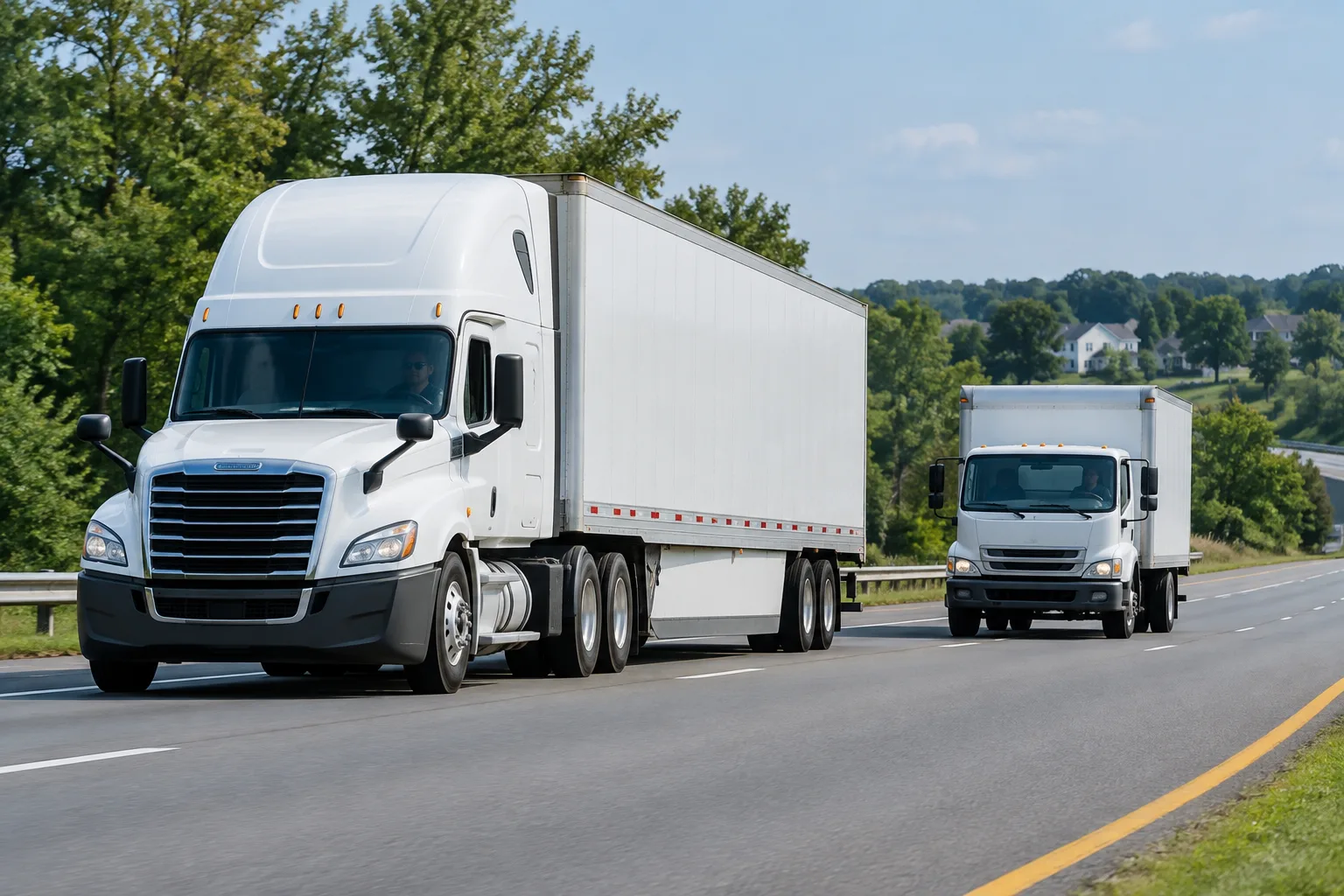
A delivery truck, tractor-trailer, or other commercial vehicle may have one company’s name on the cab and belong to a different business. After a crash near Bel Air, that difference can raise questions about who employed the driver, controlled the trip, maintained the vehicle, or arranged the delivery. Owner-operator truck accident liability in Maryland depends on the facts—not simply on whose name appears on a truck or lease. The Law Offices of David Batzer helps readers understand the issues that may matter when sorting out those relationships. This article explains how ownership, leases, and carrier arrangements can affect a claim, what records may help clarify each party’s role, and why identifying all potentially responsible businesses can be important.
How can a lease or owner-operator arrangement affect truck accident liability?
A truck’s registered owner, the motor carrier that arranged the trip, the company that hired the driver, and the business receiving a delivery may be different entities. Each can have a different role. For example, an owner-operator may own or lease the truck but haul loads for a carrier. The carrier may arrange dispatch and set trip requirements, while another company handles loading or delivery.
Those labels do not settle liability on their own. A lease may describe responsibilities for equipment, maintenance, insurance, or operations, but what happened in practice can matter too. Investigators may consider who selected or supervised the driver, who controlled the work, and whether a business’s own actions contributed to the crash. A company could also face a separate question about its own conduct, such as vehicle maintenance or driver screening, depending on the facts.
An independent-contractor label is not necessarily the end of the inquiry. The relationship between the driver and carrier, the terms of any agreement, and the degree of control may all be relevant. For a broader overview of who may be liable after a Bel Air truck crash, it helps to look beyond the driver’s name and the truck’s markings.
Why does the truck’s name or lease not answer the question?
A company logo can identify a business connection without proving who controlled the trip or caused the collision. Lease and delivery documents can offer useful clues, but they need to be considered alongside other evidence. In Bel Air and elsewhere in Maryland, responsibility is generally evaluated based on the facts and applicable law.
Which parties may have a role in a truck accident claim?
A crash may involve more than the driver and the vehicle owner. Depending on the circumstances, potentially relevant parties can include:
- The driver: The driver’s conduct, training, and work status may be examined.
- The motor carrier: Dispatch records, operating arrangements, and the carrier’s relationship with the driver may help clarify its role.
- The vehicle owner or lessor: Maintenance duties or other responsibilities in an agreement may be relevant.
- A shipper, broker, or delivery business: The business’s role in arranging, loading, or directing a trip may warrant review if connected to the events.
- A maintenance provider or other contractor: Work performed on the truck may be relevant if a mechanical issue is involved.
This list is not a conclusion that any particular party is legally responsible. More than one party may be considered, but a business relationship alone does not establish fault. Evidence must connect a party’s conduct or legal responsibility to the crash and the resulting harm.
In Bel Air, a claim may involve Maryland law and, depending on the case, proceedings in Harford County courts. Which court or legal rules apply can depend on the facts and the issues in dispute. Because relationships among carriers, owners, and drivers can be complex, it may help to understand the steps involved in a Maryland truck accident claim while potentially responsible parties are being identified.
What records can help clarify who was responsible?
The facts behind a trip may be spread across records held by different businesses. Reviewing available records can help show who owned or leased the vehicle, who arranged the work, and which responsibilities each party accepted or exercised. The significance of any record depends on its context; a document may identify a business connection without proving that the business caused the crash.
Potentially useful materials may include:
- Lease agreements and records identifying the truck’s owner or lessee
- Dispatch instructions, trip assignments, and communications about the route
- Delivery paperwork, bills of lading, or loading records
- Driver qualification, training, and work-status records
- Vehicle inspection, repair, and maintenance records
- Crash-scene evidence, photographs, witness accounts, and available electronic vehicle data
Availability and retention can vary. Some records may be held by a carrier, owner, shipper, or service provider, and some may be subject to legal requirements or preservation procedures. A focused review can help determine which records matter and how to request or preserve them. A closer look at how a trucking accident investigation can examine company relationships may help explain why lease, dispatch, delivery, and carrier documents are considered together.
What should an injured person keep in mind while roles are being clarified?
It can be useful to retain available crash-related documents and note the names of businesses or vehicles involved, without assuming that a logo or a form settles liability. People may also wish to keep copies of communications and insurance information they already receive. An attorney can explain what steps may be appropriate in a particular situation. For more general background, see this Maryland truck accident claim guide.
Frequently Asked Questions
Is the truck’s registered owner automatically liable after a crash?
No. Vehicle ownership alone does not automatically establish legal responsibility for a collision. The owner’s role, any lease terms, the driver’s relationship with the owner or carrier, and the facts surrounding the crash may all matter. In some situations, an owner may have relevant responsibilities; in others, the evidence may point elsewhere. A Maryland attorney can assess how the law applies to the specific facts.
Can a trucking company be responsible if the driver is an independent contractor?
Possibly, but an independent-contractor label does not resolve every liability question. The working relationship, the company’s control over relevant activities, the agreements, and the company’s own conduct may be examined. Different legal theories can apply to responsibility for a driver’s conduct or a business’s direct actions. The analysis is fact-specific, so the label in a contract should not be treated as the only answer.
Does a lease agreement decide who pays for a truck crash?
A lease can help show how the parties assigned responsibilities for the truck, insurance, maintenance, or operations. It does not necessarily determine the outcome of an injury claim by itself. Investigators may compare the written terms with records showing how the trip was actually arranged and carried out. The agreement is one part of a broader review of the facts and applicable Maryland law.
Does it matter if the crash happened near Bel Air?
The location can matter because the applicable law and court procedures depend on jurisdiction and the details of a claim. A crash near Bel Air may raise questions under Maryland law and may involve Harford County proceedings, depending on the case. The location does not by itself identify which company is responsible. Laws and procedures can vary by jurisdiction and may change, so local legal guidance can help clarify the issues.
How The Law Offices of David Batzer Can Help
The Law Offices of David Batzer is dedicated to helping injured people understand the questions that may arise after a commercial truck crash. Evaluating a claim may involve looking beyond the driver and truck markings to consider ownership, leases, carrier relationships, trip records, and other evidence. The firm can discuss the circumstances, explain general legal options, and assess whether further investigation may be appropriate. If you were hurt in a truck crash in Bel Air or elsewhere in Maryland, contact The Law Offices of David Batzer to request a consultation and discuss your situation.
Disclaimer: The information in this article is for educational purposes only and does not constitute legal advice. Contact a qualified attorney licensed in Maryland for advice specific to your situation.